
When your HVAC system fails in the dead of winter, it is not just an inconvenience. It is a crisis.
During a record-breaking summer heatwave, a broken AC can become dangerous. For homeowners and facility managers, climate control failure leads to burst pipes, mold growth, and health risks for vulnerable residents.
In the high-stakes world of home services, speed and technical precision are the only things that matter. This guide covers immediate troubleshooting steps, how to identify a true HVAC emergency, and why professional intervention is a mechanical necessity.
Is It a Real HVAC Emergency? 3 Signs You Cannot Wait
Not every rattle requires a midnight service call. Some sounds are normal. But the following three scenarios demand an immediate, rapid response.
HVAC failed in extreme weather? Learn 24/7 emergency HVAC repair, troubleshooting steps, costs, and why rapid response protects your home. Free guide.
Sign #1: Burning Smells or Smoke. If you smell ozone, burning plastic, or see smoke coming from your vents, shut off your system at the breaker immediately. This often indicates a blower motor failure or a dangerous electrical short circuit. Power grid fluctuations can cause these electrical failures.
Sign #2: Gas Leaks (The Rotten Egg Odor). For gas-powered furnaces, a sulfur-like smell is a critical warning. It indicates a leak in the line or a cracked heat exchanger. Evacuate the premises. Call an emergency technician and your local utility provider instantly.
Sign #3: Complete Loss of Climate Control in Extreme Temps. In 2026, extreme weather shifts are more common than ever. If the outdoor temperature is below freezing or above 95°F and your system is dead, your home’s structural integrity and your health are at risk. Pipes can freeze and burst. Vulnerable family members can suffer heat stroke.
Immediate Troubleshooting: The 5-Minute Checklist
Before calling for 24/7 repair, perform these rapid checks. Sometimes the solution is a simple oversight that does not need a technician.
✅ Step 1: Check the Breaker. High-performance HVAC systems can trip a circuit during a power surge. Go to your electrical panel and look for a tripped breaker. Reset it once.
✅ Step 2: Check Thermostat Batteries. A blank screen often just means the batteries are dead. Replace them with fresh ones.
✅ Step 3: Check the Air Filter. A completely clogged filter can cause the system to overheat and “lock out” for safety. Replace it if it looks dirty.
✅ Step 4: The S.S.S. Rule. Check the Switch (is the furnace power switch on?), the Setting (is it on “Cool” or “Heat”?), and the Sensor (is the outdoor unit blocked by debris?).
💡 Pro Tip: Keep spare air filters and thermostat batteries in your utility closet. These small items can save you an emergency service call.
Why Professional Forensic Maintenance Saves Money
When a technician from an elite service provider arrives, they are not just “fixing a part.” They are performing a technical optimization of your home’s mechanical envelope.
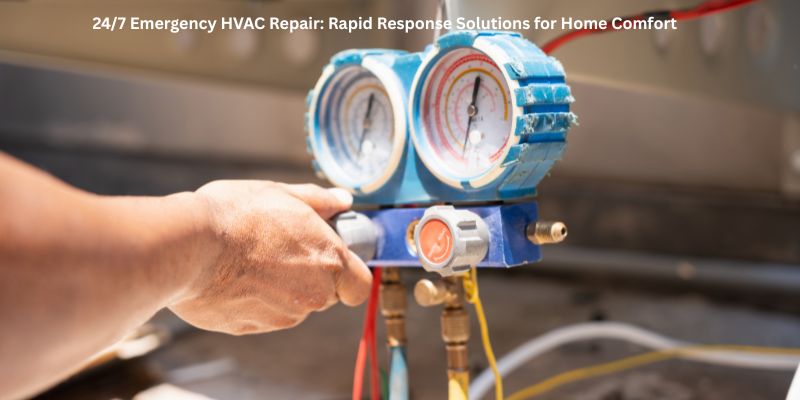
Advanced Diagnostic Tools. Modern emergency repair uses thermal imaging and ultrasonic leak detection. These tools find problems that human eyes cannot see. Digital diagnostic systems ensure precision.
Energy Efficiency & CRO (Comfort Rate Optimization). A system that has suffered an emergency failure often runs inefficiently afterward. Professionals ensure the system is calibrated to 2026 energy standards. This reduces your monthly utility overhead.
Structural Material Verification. A professional checks the structural integrity of critical components. Coils, heat exchangers, and capacitors must meet manufacturer specifications. Cheap substitutes fail faster.
The Cost of Delay: Structural & Financial Risks
Ignoring a failing HVAC unit leads to a chain reaction of home damage. Every hour you wait, the problem gets worse.
Humidity Spikes. When AC fails in summer, humidity rises rapidly. This leads to rapid mold growth inside drywall and insulation. Mold remediation costs thousands of dollars.
Frozen Coils. A refrigerant leak or airflow problem causes the evaporator coil to freeze. When it thaws, water damages floors, ceilings, and furniture. Water damage restoration is expensive and time-consuming.
Component Cascade. A failing capacitor puts strain on the compressor. The compressor is the most expensive part of your system. One small part failure can destroy the entire unit.
Choosing a Rapid Response Partner
When searching for “Emergency HVAC repair near me,” look for these high-authority markers. Not all companies are equal.
NATE Certification. This is the gold standard for technician expertise. NATE-certified technicians pass rigorous exams. They know the latest technology.
Transparent Pricing. A reputable company provides upfront diagnostic fees. They do not add hidden “emergency” surcharges. Ask for pricing before they start work.
Guaranteed Parts. Ensure the company uses high-spec structural components, not generic substitutes. Quality electrical components last longer and perform better.
24/7 Availability. A true emergency service answers the phone at 2 AM. They arrive within hours, not days. Test their response time by calling after hours.
External Resource: ENERGY STAR – Heating and Cooling Efficiency Standards
Common HVAC Emergencies and Their Causes
Refrigerant Leaks. Low refrigerant causes the system to freeze up. It also damages the compressor. Leaks often come from corrosion or physical damage.
Fan Motor Failure. The blower fan or condenser fan stops working. This causes overheating or poor airflow. Motor failures are common in older systems.
Thermostat Malfunction. A faulty thermostat does not send proper signals. The system may run constantly or not at all. Sometimes the fix is as simple as recalibration.
Clogged Condensate Drain. Water backs up and triggers a safety shutoff. This is common in humid climates. Regular maintenance prevents this issue.
Electrical Failures. Capacitors, contactors, and circuit boards fail without warning. Modern HVAC systems rely on complex electronics.
Preventive Maintenance: Avoiding the Next Emergency
The best emergency is the one that never happens. Preventive maintenance reduces your risk of sudden failure by 95%.
Biannual Tune-Ups. Schedule service in the spring before the cooling season. Schedule again in the fall before heating season. A technician cleans coils, checks refrigerant, and tests safety controls.
Filter Changes. Change your air filter every 30 to 90 days. Set a calendar reminder. A clean filter is the cheapest insurance for your system.
Outdoor Unit Care. Keep the outdoor unit clear of leaves, grass, and debris. Clean the fins gently with a garden hose. Maintain at least two feet of clearance around the unit.
External Resource: ASHRAE – Technical Standards for HVAC Systems
The True Cost of Emergency HVAC Repair
Emergency repair costs vary based on time, parts, and labor. Here is what you can expect in 2026.
Diagnostic Fee. Most companies charge $79 to $199 to come out and diagnose the problem. This fee is often waived if you proceed with the repair.
After-Hours Premium. Evening, weekend, or holiday calls add $50 to $150. Some companies charge double time after midnight.
Common Repair Costs. Capacitor replacement runs $150 to $300. Blower motor runs $400 to $800. Compressor replacement runs $1,500 to $3,000. Refrigerant leak repair runs $300 to $1,500.
System Replacement. If your system is beyond repair, replacement costs $4,000 to $12,000. Smart HVAC systems with zoning cost more but save energy.
External Resource: ACCA – Air Conditioning Contractors of America Standards
Frequently Asked Questions
Complete system failure during extreme temperatures (below freezing or above 95°F), gas leaks, burning smells, smoke, or water leaks from the unit.
Most reputable companies arrive within 1 to 3 hours. Some offer a 30-minute response in urban areas. Ask about the estimated arrival time when you call.
Only basic items like filter changes, battery replacement, and breaker resets. Anything involving refrigerant, gas, electricity, or moving parts requires a licensed professional.
Diagnostic fees run $79 to $199. Repairs add $150 to $1,500, depending on the part. After-hours premiums add $50 to $150.
If the system is over 15 years old and the repair costs more than half of a new system, replace it. Otherwise, repair is usually the better choice.
Twice per year. Once in the spring for cooling. Once in the fall for heating. Regular maintenance prevents 85% of emergency failures.
Yes, for most homeowners. Plans cost $150 to $300 per year. They include two tune-ups, discounted repairs, and priority emergency service. The tune-ups alone are worth the cost.
Common causes include a failing compressor, shorted electrical components, or a dirty filter, causing overheating. Call a technician immediately. Do not keep resetting the breaker.
📞 Need Emergency HVAC Repair? Call a Certified Technician Now
Conclusion – Restore Your Comfort Today
A climate-controlled environment is the foundation of a functional home. When your system fails, every hour of delay increases damage and repair costs.
Burning smells, gas odors, or complete failure in extreme weather are true emergencies. Do not wait. Do not “see if it fixes itself.”
Act fast. Call a certified 24/7 emergency HVAC repair service. Protect your home, your family, and your peace of mind. Read our guide on home protection for more tips.