
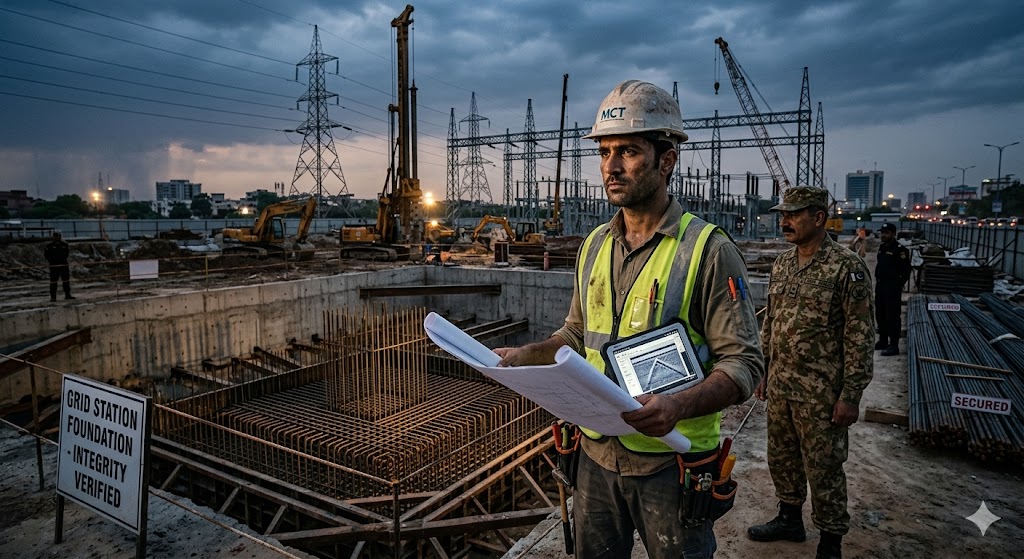
CHAPTER 1 | THE IRON SENTINEL
The Hollow Foundation
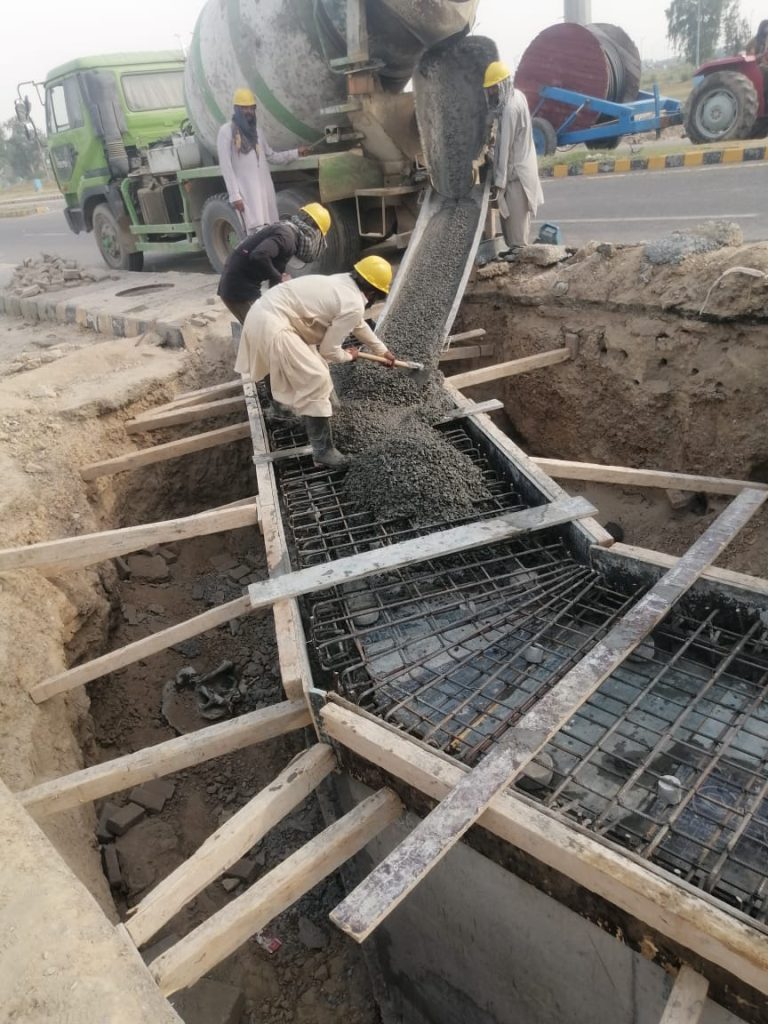
The air in the Sector 9 grid station didn’t just carry the scent of dust; it carried the metallic, ozone tang of impending lightning. For Aryan, a civil engineer whose soul was etched into the blueprints he carried, the site was more than a workplace—it was a living, breathing organism of concrete and steel. But today, the rhythm of the machinery felt off. The vibration of the rotary drills against the limestone crust of the earth didn’t resonate with the usual steady hum of progress. It sounded hollow.
Aryan stood at the edge of the excavation pit, his boots coated in the fine, pale silt of the New York plains. At thirty-six, his face bore the subtle cartography of a man who had spent a decade under the desert sun of Dubai and the unpredictable winds of the Hudson Valley. He wasn’t just a manager; he was a multidisciplinary force. To him, a 138kV transmission line wasn’t just a utility; it was a lifeline of energy that required mathematical perfection.
“The torque on Drill No. 4 is peaking too early,” Aryan muttered to himself, checking the digital readout on his rugged tablet. He didn’t need to be standing over the borehole every second—standard engineering protocols and the specialised guidelines provided by the national consultants clearly stated that mechanical drilling was a repetitive process requiring only periodic oversight. Yet, his intuition, sharpened by seventeen years of seeing what others missed, told him that silence was being sold as “efficiency.”
The Conflict Begins
The conflict had been brewing for months. The client’s oversight team, the powerful Golden Housing Authority Commission (GDAC), was staffed by men who preferred the air-conditioned comfort of their Manhattan office to the gritty reality of the pile caps. They viewed Aryan with a mixture of envy and irritation. In every weekly progress meeting, Aryan’s technical rebuttals were like surgical strikes. When they questioned his timelines, he provided mechatronic data. When they challenged his material costs, he quoted the fluctuating price of Grade-60 steel with the precision of a stockbroker.
The tension reached a breaking point during the latest boardroom showdown. The Project Colonel, a man who valued results over rhetoric, had watched as the GDAC engineers tried to corner Aryan on a minor delay. Aryan had simply opened his laptop, projected a 3D rendering of the seismic-resistant foundation, and pointed out a fatal flaw in the GDAC’s original drafting—a flaw that would have cost the project millions in future repairs. The Colonel had nodded, ordered the GDAC team to follow Aryan’s lead, and walked out.
The humiliation for the GDAC team was public. And in the world of high-stakes infrastructure, a bruised ego is a dangerous thing.
The Trap
That evening, as the sun dipped below the horizon, painting the skeletal frames of the transmission towers in blood-orange hues, a formal letter was dispatched. It wasn’t a thank-you note. It was an accusation.
Aryan received the notification on his phone while he was reviewing the structural integrity of the newly arrived reinforcement steel. The subject line read: “Regarding Alleged Absence and Replacement of Site Engineer.”
The letter claimed Aryan had been “notoriously absent” during critical drilling phases. It was a narrative of convenience, a bureaucratic hit job designed to remove the man who saw too much. They wanted a “suitable replacement”—someone more compliant, someone who wouldn’t notice the discrepancies in the inventory.
Aryan looked at the massive piles of steel rebar stacked near the eastern perimeter. Under the flickering halogen lights, the steel looked like the ribs of a buried giant. He walked over to the stack, his hand grazing the cold, ribbed surface of the metal. He noticed the serial numbers. Then, he noticed the gaps in the stacking pattern.
An engineer knows the volume of his materials by sight. A pile cap requires a specific tonnage. But as Aryan performed a quick mental calculation—cross-referencing the site’s delivery logs with the physical mass before him—a cold realization settled in his gut.
The steel wasn’t just being used. It was being bled.
“So, that’s why you want me gone,” Aryan whispered into the wind.
He wasn’t just an engineer anymore. He was a witness. The GDAC’s request for his replacement wasn’t about his presence at the drill; it was about his eyes on the inventory. They were stealing the very bones of the project—high-grade reinforcement steel—and they needed a ghost to sign off on the empty spaces.
The Security Chief
Aryan turned away from the pit and headed toward the small, dimly lit security hut near the main gate. Inside sat Sergeant Frank Malik, a man whose military bearing hadn’t been softened by retirement. He was the security in charge, and his eyes held the same weary integrity as Aryan’s.
“Frank,” Aryan said, stepping into the light of the hut. “We need to talk about what’s leaving this site on the midnight trucks.”
The sergeant looked up, his face hardening. He knew. He had seen the shadows, too, but he had no technical ally to back him up—until now.
“Mr Aryan,” Frank replied, his voice a low gravel. “I was wondering when you would notice the ‘leakage.’ They think because you are an architect and a planner, you only look at the sky. They forgot you are a civil engineer who knows the weight of the earth.”
Aryan pulled out his notebook. “They want me replaced for being absent. I’m going to give them a rebuttal that will make the floor of the GDAC headquarters shake. But I need more than just my word. I need the gate logs, and I need the truth about the pile caps.”
The First Text
The suspense in the air was now thick enough to touch. Aryan knew that by contesting this replacement, he was declaring war on a syndicate that reached far deeper than a few disgruntled site inspectors. He was risking his career, his reputation, and perhaps his safety. But as he looked back at the grid station—a project he had nurtured from a mere blueprint into a rising reality—he knew he couldn’t let it be built on a foundation of lies and hollow concrete.
He sat down at his desk in the site office, the glow of his monitor the only light in the room. His fingers hovered over the keyboard. He wouldn’t just defend his job; he would protect the integrity of the steel.
His phone buzzed. A text from an unknown number: “They’re watching you. Be careful.—O”
Aryan looked up at the site office window. On the second floor, a light was on. A silhouette stood behind the blind—a woman’s silhouette. Olivia.
The “Iron Sentinel” was beginning to fight back.
And somewhere in the shadows, Olivia Reynolds was watching and waiting.
• Why Structural Integrity Saves Lives
• Using Thermal Imaging to Stop Midnight Heists
• Whistleblower Engineers: Stories of Courage
• FBI — Public Corruption & Infrastructure Fraud
• ASCE: Case Studies on Structural Sabotage
CHAPTER 2 | THE IRON SENTINEL
The Midnight Audit
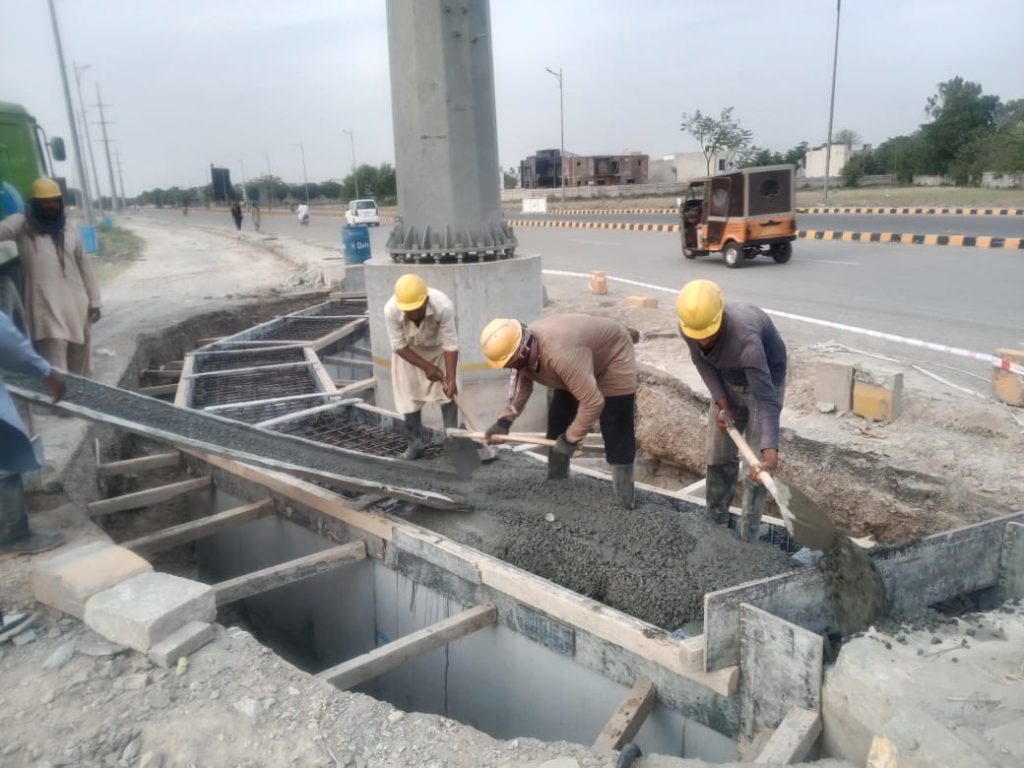
The clock on the wall of the site office ticked with a heavy, rhythmic precision that matched the beating of Aryan’s heart. It was 1:45 AM. Outside, the New York night was thick with a humid haze, and the usual roar of the city had faded into a distant, low hum. But at the 132kV grid station site, the silence was a lie.
Aryan sat in the darkness of his office, the only illumination coming from the dimmed screen of his laptop. He had spent the last four hours cross-referencing the digital delivery invoices with the physical weight-bridge receipts. The discrepancy was staggering. Nearly fifteen tons of Grade-60 reinforcement steel — the very spine of the project — had vanished from the records over the last three weeks.
“Technological precision,” Aryan whispered, his fingers flying across the keys. He wasn’t just using spreadsheets; he was using the site’s own mechatronic sensors attached to the heavy machinery. Every time a crane moved, it logged a data point. Aryan had discovered that the cranes were moving heavy loads at 2:00 AM — hours after the laborers had been dismissed.
Aryan’s phone buzzed. A text from Olivia: “I can’t sleep. Something feels wrong tonight. Be careful, Aryan. And… I’m glad you’re the one watching over this project.” He stared at the screen for a long moment. In the chaos of corruption, someone was thinking about him. Not as an engineer. As a man.
Suddenly, a soft knock at the door made him freeze. His hand instinctively went to the heavy steel flashlight on his desk.
“Mr. Aryan? It’s me.”
It was Sergeant Frank Malik. Aryan let out a breath he didn’t know he was holding and unlocked the door. Frank stepped in, his jacket damp with sweat. He looked like a man who had just come off the front line.
“They are here,” Frank whispered, his voice vibrating with suppressed anger. “Two unmarked flatbed trucks just entered through the back perimeter fence. The padlock was opened with a key, not forced. It’s an inside job, Aryan. The GDAC night guards are turning their backs.”
Aryan stood up, his face hardening into a mask of cold determination. “Did you get the GDAC security guards to position themselves?”
“Yes,” Frank replied. “They are stationed behind the transformer foundations. But we have a problem. One of the truck drivers is talking to the night supervisor — the one who signed the complaint against you for ‘absence.’ If they see us, they’ll dump the load and claim it was just a logistical move.”
Aryan grabbed his tablet. “They won’t see us. We’re going to use the technology they think I don’t know how to handle.”
The Thermal Eye
Aryan pulled up the live feed from a hidden 360-degree thermal camera he had installed under the guise of “seismic monitoring” weeks ago. On the screen, glowing orange figures were moving like ghosts around the steel yard. He watched as the heavy rebar, intended for the pile caps of the high-tension towers, was hoisted onto the trucks.
“They are stealing the structural integrity of this entire grid,” Aryan said, his voice trembling with a mix of rage and professional heartbreak. “If those pile caps are poured with half the required steel, those towers will collapse during the first hurricane season. People will die, Frank.”
“What’s the plan?” Frank asked, his hand resting on his belt.
“We don’t stop the trucks,” Aryan said, a dark smile playing on his lips. “Not yet. We document the serial numbers of the bundles being loaded. I’ve synced the thermal camera to the inventory database. Every bundle they lift is being ‘checked out’ by my software right now. We let them leave the site, and then we have the GDAC security intercept them two miles down the road, outside the jurisdiction of the site guards.”
For the next hour, they watched the heist in high-definition thermal heat signatures. It was a surgical operation of greed. The very men who had called Aryan “unprofessional” were now overseeing the gutting of the project.
The Iron Clad Response
Once the trucks departed, disappearing into the dark maw of the city, Aryan turned back to his computer. He didn’t sleep. Instead, he began to write. This wasn’t just a rebuttal anymore; it was an execution.
Aryan titled the file: “Statement of Truth: Choosing Project Integrity over Personal Ease.”
He wrote with the fury of a man whose honor had been sparked. He addressed the “Competent Authority” directly, but he didn’t beg for his job. He commanded the narrative.
“I am reaching out to you at a critical junction where my professional integrity and the project’s future are at stake. I have always believed that an engineer’s primary duty is to the project and the structure they build, not to the individuals who seek to exploit it.”
He detailed the technical reality of the drilling phase, quoting the international engineering codes (AECOM/ASCE) that the GDAC engineers had conveniently ignored. But then, he turned the knife.
“The recent attempt to publicly humiliate me was not born of my absence, but of my vigilance. While I am accused of not being present during mechanical drilling, I ask the management: Where were the supervisors when fifteen tons of Grade-60 reinforcement steel were removed from the Sector 9 yard under the cover of darkness?”
He concluded with the “Unbeatable Challenge.”
“I hereby invite an independent, third-party verification from GDAC and Tetragon. Let them perform a physical audit of the steel currently embedded in the foundations versus the procurement logs. I have nothing to hide. I invite you to speak with Sergeant Frank Malik and the GDAC security team, who have stood as the only true protectors of this project’s assets while others looked the other way.”
The Dawn
By the time the first rays of the sun began to bleed through the window, the letter was sent. Aryan hit “Send” with a firm, steady click. He knew that the moment that email hit the inbox of the Chief Engineer and the Project Colonel, the site would become a war zone.
He walked out of the office and stood on the embankment, looking down at the pile caps. They looked solid to the naked eye, but Aryan knew the truth. He knew which ones were strong and which ones were hollowed out by corruption.
As the morning shift began to arrive, the GDAC night supervisor walked past Aryan, offering a smug, mocking smile. He didn’t know that his career had just ended. He didn’t know that the “absent” engineer had been watching him through a lens of heat and data all night.
Frank walked up to Aryan, handing him a cup of hot, strong coffee. “The trucks were intercepted, Aryan. The drivers are talking. They’ve named the supervisor.”
Aryan took a sip of the coffee, the warmth spreading through his tired limbs. “This is just the beginning, Frank. They’ll try to fight back. They’ll try to say the data is forged. They’ll try to ruin my name before the Colonel can read that letter.”
“Let them try,” Frank said, looking out at the rising towers. “They are fighting an engineer. They forgot that you know how to build things that don’t break.”
Aryan looked at the steel-blue sky. The suspense was no longer about whether he would keep his job. It was about whether the truth would be strong enough to hold up the weight of the towers.
His phone buzzed again. Another text from Olivia: “I read your letter before you sent it. You’re braver than anyone in that GDAC boardroom. Don’t stop now, Aryan. The city needs you.”
He didn’t reply. But for the first time in weeks, he smiled.
End of Chapter 2 — The Midnight Audit
🔗 Further Resources:
• Using Thermal Imaging to Stop Midnight Heists
• Grade-60 Rebar: Why Density Matters
• Whistleblower Engineers: Stories of Courage
• ASCE: Case Studies on Structural Sabotage
• NYC Department of Buildings — Engineering Ethics
CHAPTER 3 | THE IRON SENTINEL
The Boardroom Siege
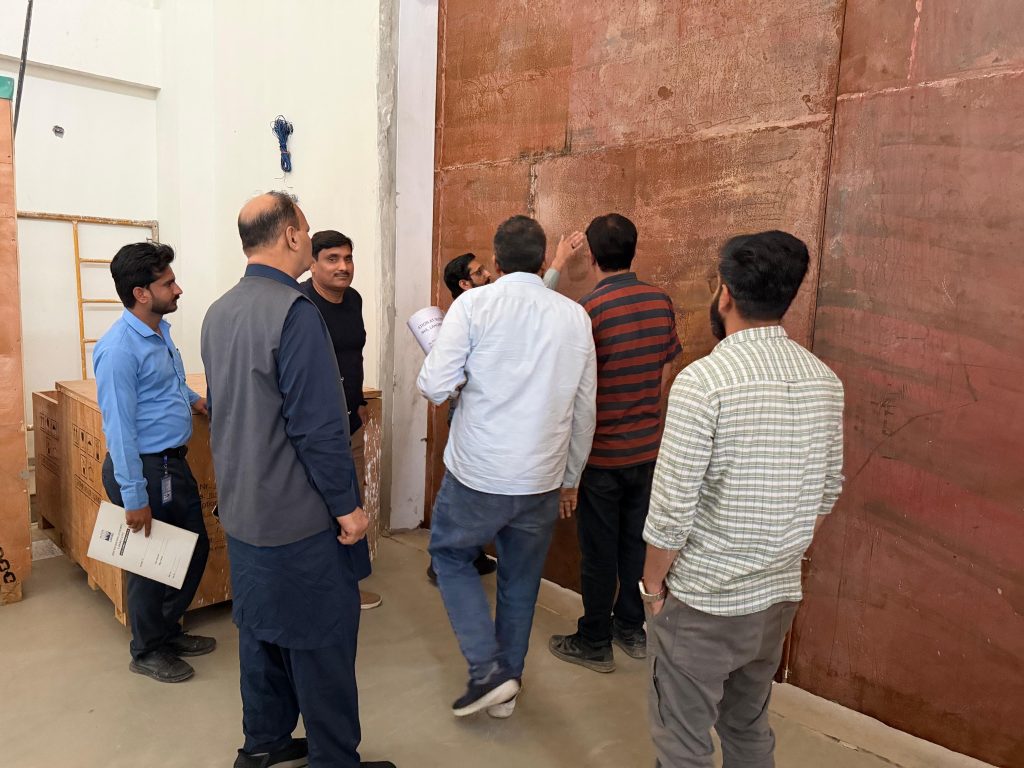
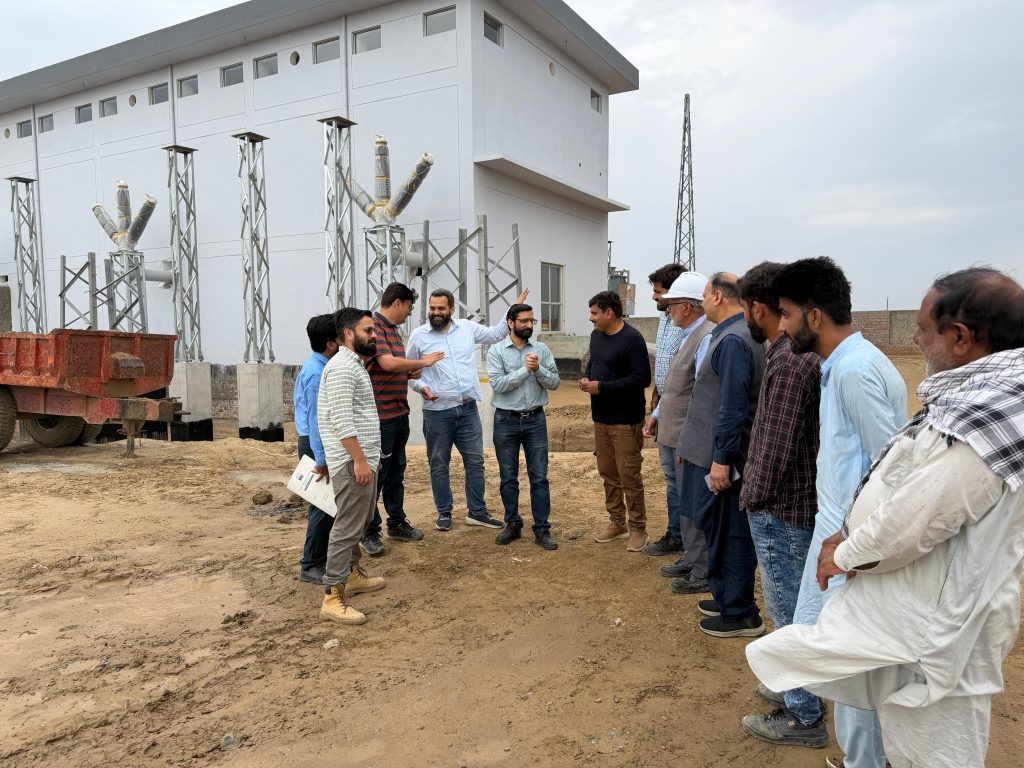
The headquarters of Tetragon Consulting was a glass-and-steel monolith that overlooked the Manhattan skyline, a stark contrast to the mud and rebar of the Sector 9 site. Inside the “War Room” on the 12th floor, the air-conditioning was humming at a bone-chilling temperature, but the men sitting around the mahogany table were sweating.
At the head of the table sat Colonel James Hargrove, a man whose reputation for discipline was as rigid as the reinforced concrete Aryan poured. To his left were the GDAC engineers—men in crisp, ironed shirts who had never seen the underside of a transformer foundation. To his right sat the Chief Engineer of Tetragon, looking pale as he stared at the document Aryan had sent at dawn.
Aryan stood at the far end of the table. He hadn’t changed his clothes. His jacket still carried the faint scent of diesel and the dust of the midnight audit. He looked out of place in this room of polished leather, yet he was the only one who seemed truly grounded.
“Engineer Aryan,” the Colonel began, his voice like the low rumble of a distant storm. “I have read your… ‘Statement of Truth.’ It is a heavy accusation. You are not only contesting your replacement; you are alleging a criminal conspiracy involving theft and structural sabotage.”
“I am stating facts, Colonel,” Aryan replied, his voice calm and resonant. “Engineering is the science of facts. If the inputs don’t match the outputs, there is a failure in the system. In this case, the ‘failure’ is walking away on flatbed trucks.”
The Lead GDAC Engineer, a man named Naveed, slammed his hand on the table. “This is a diversion! We filed a complaint about your incompetence and your repeated absence from the site. You are trying to cover your professional failures with these wild fairy tales about stolen steel. Where is your proof? Where is your presence?”
Aryan didn’t flinch. He reached into his bag and pulled out a sleek, black USB drive. “You want to talk about presence? Let’s talk about thermal signatures.”
He plugged the drive into the room’s projection system. The lights dimmed automatically, and a massive 4K screen flickered to life. The room went silent.
The footage was haunting. In ghostly shades of white and orange, the screen showed the Sector 9 yard at 2:14 AM. The men in the room watched as a crane—operated by someone clearly skilled—hoisted bundles of Grade-60 rebar onto unmarked trucks.
“This is infrared footage from a mechatronic sensor I installed for seismic vibration monitoring,” Aryan explained, pointing to the screen. “Notice the timestamp. Notice the truck license plates, which were captured by the high-definition gate camera I synced to my private server. And most importantly,” Aryan paused, zooming in on a figure standing near the truck, “notice the man signing the manifest. That is your Night Supervisor, Mr. Naveed.”
Naveed’s face went from pale to a sickly shade of grey. “That… that could be anyone. It’s dark. The resolution—”
“The resolution is 2160p,” Aryan interrupted. “And the digital signature on the crane’s log matches your supervisor’s biometric ID. Every pound of steel that left that site is accounted for in my digital ledger—a ledger you didn’t know existed because you were too busy writing letters about my ‘absence’ from your office.”
In the corner of the room, Olivia Reynolds sat quietly, her green eyes never leaving Aryan. She didn’t speak. She didn’t need to. Her presence alone was a message: “I believe you. And I’m not leaving.” When their eyes met across the table, something unspoken passed between them — respect, trust, and the faintest whisper of something more.
The Colonel leaned forward, his eyes fixed on the screen. “You mentioned structural sabotage, Aryan. Explain.”
Aryan switched the slide. A 3D CAD model of a 138kV tower foundation appeared. “This is the design. To save time and hide the theft, the team planned to pour the concrete for the pile caps today. Once that concrete is poured, the missing steel is hidden forever. But the foundation will only have 60% of its required tensile strength. During a high-wind event or a tectonic shift, these towers won’t just lean. They will snap. The grid will fail, and the surrounding residential sectors will be in the path of falling 138kV lines.”
The room was so quiet you could hear the tick of the Colonel’s watch. Aryan wasn’t just defending his career anymore; he was showing them the catastrophe he had prevented.
“I have already contacted Tetragon and GDAC,” Aryan continued, his voice dropping an octave, becoming more dangerous. “An independent team is currently at the site with ground-penetrating radar. They are scanning the foundations I refused to pour yesterday. If they find that the steel cages are incomplete, it won’t just be a matter of ‘replacing an engineer.’ It will be a matter of criminal prosecution for every man who signed those fraudulent progress reports.”
The Chief Engineer of Tetragon finally spoke, his voice trembling. “Aryan, why didn’t you come to us first? Why the drama? Why the security guards?”
“Because,” Aryan said, looking him straight in the eye, “when the house is on fire, you don’t ask the people holding the matches for help. You call the fire department.”
The Colonel stood up. The movement was sudden, like a spring being released. He looked at Naveed and the other GDAC representatives. “Get out—all of you. Your access to this project is suspended effective immediately. My office will be conducting a full audit of every invoice signed in the last six months.”
As the GDAC team scrambled out of the room, their bravado replaced by panicked whispers, the Colonel turned to Aryan.
“You’ve made a lot of enemies today, Aryan,” the Colonel said, his expression unreadable. “Men who steal fifteen tons of steel don’t just go away quietly. They have friends in high places. They have contractors and political backers who won’t be happy that a ‘Site Engineer’ ruined their payday.”
“I didn’t become an engineer to make friends, Colonel,” Aryan replied, packing his laptop. “I became an engineer to build things that last. You can replace me if you want, but you can’t replace the laws of physics. That steel needed to be there. Now it will be.”
“I’m not replacing you,” the Colonel said, walking toward the window. “But I am changing your detail. From now on, you aren’t just the Site Engineer. You are the Technical Auditor for the entire Phase 9 expansion. But be warned: the ‘leakage’ you found is just a drop in the ocean. There is a reason they wanted you gone. You’ve just poked a very large, very hungry hornet’s nest.”
Aryan felt a chill that had nothing to do with the air-conditioning. He had won the battle for the grid station, but the war for the city’s infrastructure was just beginning.
The Journalist
As Aryan walked out of the headquarters, a voice stopped him.
“Aryan?”
He turned. A woman stood near the elevator — dark hair, sharp eyes, and a face he hadn’t seen in seven years.
“Areeba?”
She smiled, but her eyes were wet. “You remember me.”
“Of course, I remember you. Dubai. The canal collapsed. Your brother—”
“You saved his life,” she finished. “I never got to thank you properly.”
She stepped closer. “I’m an investigative journalist now. I’ve been following the GDAC corruption case for months. When I saw your name on the whistleblower report… I knew I had to find you.”
Aryan looked at her — really looked at her. She wasn’t the scared girl from Dubai anymore. She was a woman on a mission.
“I have evidence that goes beyond steel theft,” Areeba said, her voice low. “Bank records. Offshore accounts. Names of the people at the very top. But I can’t publish without someone from the inside backing me up.”
“And you want me to be that someone?”
“I want you to trust me,” she said. Then, softer: “The way I trusted you seven years ago.”
Before Aryan could respond, his phone buzzed. A text from Olivia: “That was brilliant in there. Dinner tonight? We need to talk. — O”
Areeba glanced at the screen. Her expression flickered — something between hurt and understanding. “You have someone.”
“It’s complicated.”
“It always is with you, Aryan.” She tucked a strand of hair behind her ear. “Read this tonight. Then decide if you’re ready to fight the real war.”
She handed him a sealed envelope and walked away, her heels clicking against the marble floor.
Seven years ago, she was just a girl whose brother he saved. Today, she was a woman holding evidence that could bring down a syndicate — and holding feelings she’d buried for nearly a decade. “I never stopped thinking about you, Aryan.”
The Threat
As Aryan stepped outside the headquarters, his phone buzzed again. This time, an unknown number.
Aryan looked at the message, then up at the skeletal towers rising in the distance. He didn’t delete the text. He forwarded it to Sergeant Frank Malik.
Then he looked at the envelope in his hand. Areeba’s evidence. Olivia’s dinner invitation. A death threat from the syndicate.
“The suspense,” Aryan thought, “is no longer about the audit. It’s about survival.”
And somewhere across the city, two women were thinking about him — one with hope, one with fear, and both with something that felt dangerously close to love.
End of Chapter 3 — The Boardroom Siege
The Sector 7 Shadow
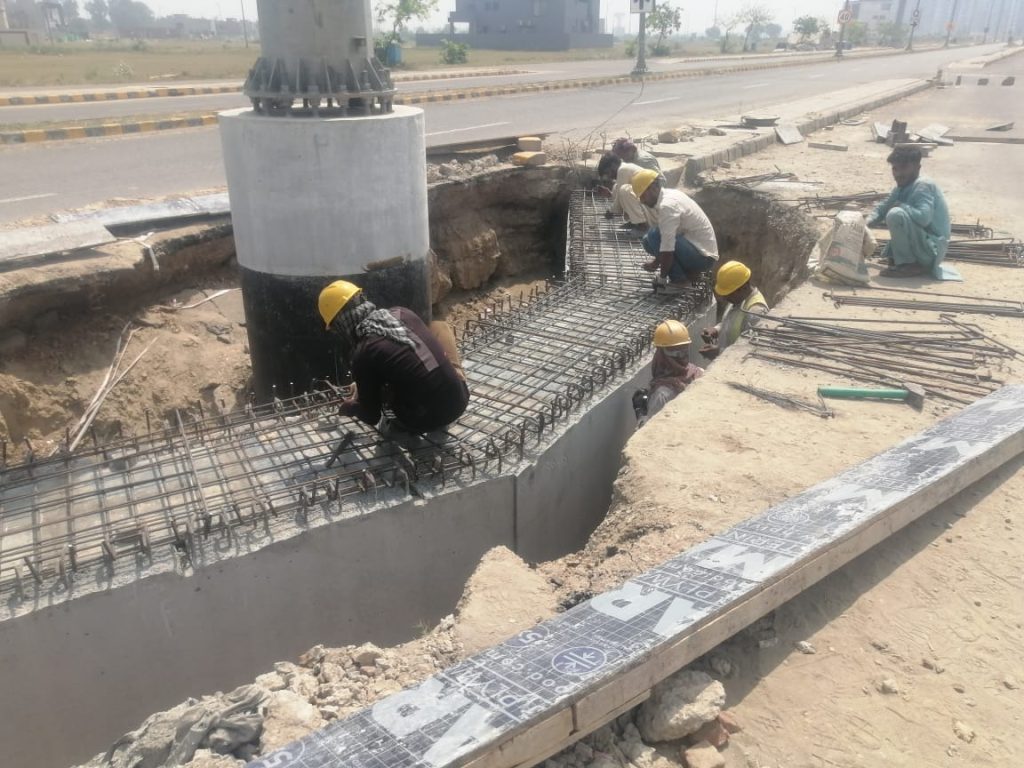
The transition from Site Engineer to Technical Auditor was supposed to be a promotion, but to Aryan, it felt like being handed a shield and told to stand in the middle of a firing range. His office was no longer a prefab cabin at the edge of a pit; it was a secure room in the heart of the GDAC Development Wing, guarded by the very security personnel he had trusted during the midnight audit.
But Aryan didn’t stay in the office. An engineer’s truth isn’t found in air-conditioned rooms; it’s found in the density of the concrete and the tension of the cables.
It was a Tuesday evening, the sky over Queens a bruised purple, heavy with the threat of a summer storm. Aryan was driving his rugged 4×4 toward the Sector 7 crossing—the very location mentioned in the anonymous threat. He wasn’t walking into a trap blindly; he was going there because Sector 7 was the site of the East River Canal Rehabilitation, a massive project he had led years ago, and now, it was the suspected “dumping ground” for the stolen steel.
As he drove, his mind drifted to the mechatronics of the situation. He had programmed a custom script on his laptop that tracked the GPS pings of the intercepted trucks. Before the drivers had been hauled away by the authorities, Aryan had managed to extract the “frequent stops” from their navigation systems. The pings clustered around an abandoned warehouse near the old canal gates.
His phone vibrated on the dashboard. It was Sergeant Frank Malik.
“Aryan, where are you? The GDAC patrol says you left the perimeter ten minutes ago.”
“I’m at the Sector 7 bypass,” Aryan replied, his eyes fixed on the rearview mirror. A black sedan with tinted windows had been trailing him since he left the main gate. “I think I found where they’re caching the Grade-60. If I can link the stolen steel from the Grid Station to the inventory of the Canal project, the Colonel will have enough evidence to go after the Board of Directors, not just the site supervisors.”
“Turn around, Aryan,” Frank’s voice was sharp, a tone used for soldiers about to walk into an ambush. “We just got word from the police. The ‘Night Supervisor’ Naveed? He didn’t just disappear. He was bailed out by a legal team tied to Hudson Infrastructure Holdings—the parent company of our main contractor. You aren’t chasing thieves anymore; you’re chasing a syndicate.”
“That’s exactly why I can’t turn around,” Aryan said, his voice tightening as the black sedan accelerated.
Aryan’s mind became a calculator. He knew this terrain — he had helped plan this sector years ago. The culverts. The soft earth. Where a heavy sedan would bottom out.
The chase began at the intersection of the bypass and the canal road. Aryan shifted gears, the engine of the 4×4 roaring as he veered off the paved road onto the dirt embankment. He knew this terrain—he had helped plan the town layout for this very sector years ago. He knew where the culverts were, where the earth was soft, and where a heavy sedan would bottom out.
The suspense was visceral. The black sedan stayed glued to his bumper, the screech of tires echoing against the concrete walls of the canal. Aryan’s heart hammered against his ribs, but his brain remained a calculator. Speed: 85 km/h. Distance to the narrow bridge: 400 meters. Angle of approach: 15 degrees.
He slammed on the brakes just before the bridge, a maneuver that sent the sedan swerving to avoid a collision. The sedan skidded, its side clipping a concrete barrier with a shower of sparks. Aryan didn’t wait. He floored the accelerator, crossing the narrow bridge and disappearing into the labyrinth of the warehouse district.
He killed his lights and rolled into the shadows of an old cement silo. He waited, his breath hitching in his chest, watching the black sedan cruise slowly past the entrance of the alleyway, its headlights searching the dark like the eyes of a predator.
The Vault
Once the car was gone, Aryan stepped out. He wasn’t safe, but he was close. He approached the warehouse the GPS had flagged.
The building was a skeletal structure of rusted corrugated iron. Inside, the sound of heavy machinery echoed—a low, rhythmic thud. Aryan climbed a stack of wooden pallets to reach a high, broken window. What he saw inside made his blood run colder than the New York night air.
It wasn’t just fifteen tons of steel. The warehouse was filled with hundreds of tons of construction material—transformers, copper wiring, high-tension cables, and mountains of Grade-60 rebar. It was a clearinghouse for stolen national infrastructure.
And in the center of the room, standing under a single flickering light, was Naveed. He was talking to a man in a tailored suit—someone Aryan recognized from the high-level planning meetings at the GDAC Board.
“The Sentinel is getting too close,” the man in the suit said, his voice carrying through the hollow space. “He didn’t just stop the pour at the grid station; he’s looking into the canal rehabilitation logs from 2022. If he finds the hollow piles there, the whole foundation of the GDAC’s budget collapses.”
“He won’t find anything,” Naveed snarled. “He’s a Site Engineer. He thinks in blueprints. He doesn’t understand that in this city, the earth swallows whatever we tell it to.”
Aryan pulled out his phone and began to record. He captured the faces, the stolen inventory, and the conversation that linked the theft to the highest levels of the authority.
Suddenly, a hand touched his shoulder. He nearly screamed. It was Areeba. Her eyes were wide, frightened, but determined. “I followed you,” she whispered. “I’ve been tracking Naveed for months. I couldn’t let you go alone.”Before Aryan could respond, the wooden pallet beneath his feet shifted. A loud crack shattered the silence.Inside, the men froze.”Who’s there?” Naveed shouted, reaching for a holster at his hip.Aryan grabbed Areeba’s hand. “Run.”
Aryan didn’t look back. He jumped from the pallets, pulling Areeba with him, hitting the ground hard and sprinting for his 4×4. Behind them, the warehouse doors flew open. Shouts and the sound of heavy boots filled the air.
He shoved Areeba into the passenger seat and scrambled into the driver’s side just as a bullet shattered his side mirror. He didn’t panic. He was an engineer; he understood trajectory. He ducked low, shifted into reverse, and smashed through a wooden gate, the 4×4 jumping as it hit the main road.
Areeba was shaking, tears streaming down her face. “Aryan… I’m sorry. I shouldn’t have—”
“You saved my life,” he said, his eyes fixed on the road. “Or at least, you tried to.”
As he sped away, he sent the video file directly to a secure cloud server, BCC-ing the Colonel and Frank.
The Confession
In the darkness of the moving car, Areeba turned to him. Her voice was barely a whisper.
“I never stopped loving you, Aryan.”
The words hung in the air like smoke.
“Seven years ago, in Dubai… when you pulled my brother from that collapsed canal… you didn’t just save him. You saved me. I was drowning in grief, and you were the only one who saw me.”
Aryan’s grip tightened on the steering wheel. “Areeba…”
“I know about Olivia,” she interrupted, her voice breaking. “I saw the way she looked at you in the boardroom. I saw the way you looked back.”
She wiped her tears with the back of her hand. “I’m not here to compete, Aryan. I’m here to help you win. Against the syndicate. Against the thieves. Against everyone who wants to see you fail.”
“And after?” he asked quietly.
“After… I’ll disappear. Like I always do.” She smiled, but it didn’t reach her eyes. “But tonight, let me stay. Let me help you carry this weight.”
The Call
His phone rang. It was the unknown number again.
Then another call. This time, Olivia.
“Aryan… I just heard. Are you okay?” Her voice was shaking. “Frank told me about the warehouse. About the shots fired.”
“I’m okay,” he said. “I have the evidence.”
“Where are you? I’m coming to you.”
He glanced at Areeba, who was staring out the window, pretending not to listen.
“I’m with someone,” Aryan said. “A journalist. She helped me.”
There was a long pause. Then Olivia, quietly: “Is it Areeba?”
“How did you—”
“I saw her at the boardroom. I saw the way she looked at you.” Another pause. “Aryan… I’m not going to ask questions I don’t want answers to. Just get somewhere safe. Please.”
She hung up.
Aryan looked at the fuel gauge. He had half a tank. He looked at the GPS. He was ten kilometers from the GDAC secure zone.
“I’m not running,” Aryan whispered to the empty car. “I’m delivering the final report.”
Areeba reached over and placed her hand on his. “Then let’s deliver it together.”
The chapter ended with Aryan racing through the rain-slicked streets of Queens, the weight of the city’s corruption behind him, the hope of justice a flickering light in the distance — and two women, each holding a piece of his heart, waiting on opposite sides of the storm.
He had moved from guarding a site to guarding the truth.
And the cost was his life. And maybe, his heart.
End of Chapter 4 — The Sector 7 Shadow
The Weight of Justice
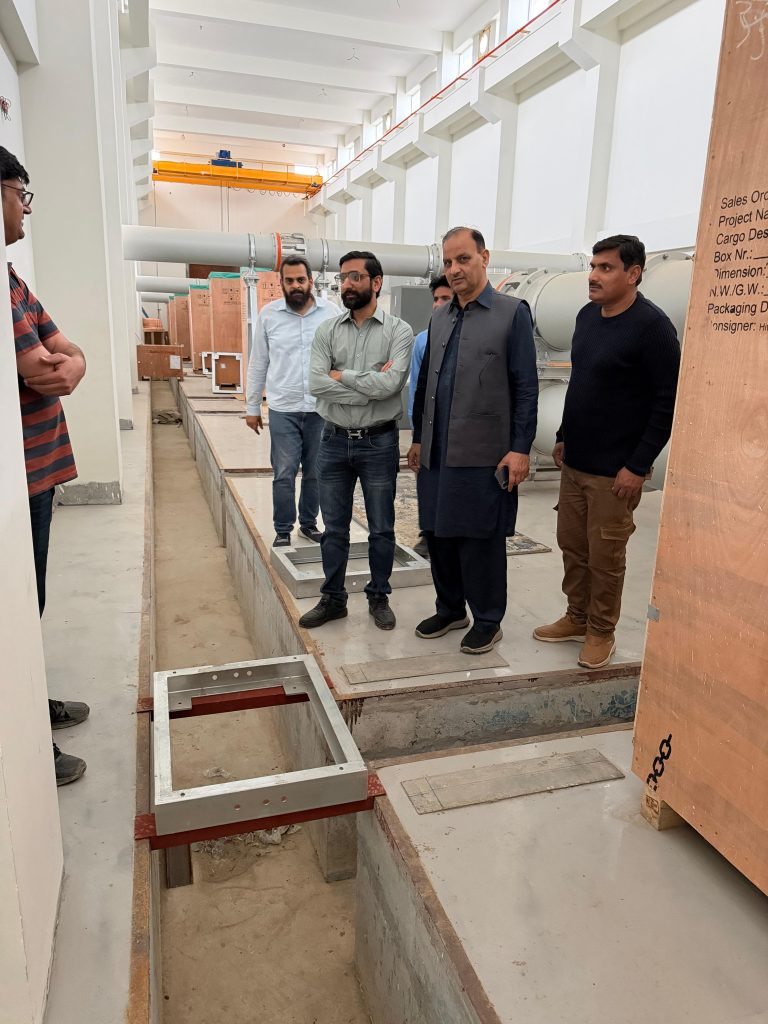
The rain began as a drizzle and transformed into a torrential downpour, a classic New York summer storm that turned the construction sites into mud-filled trenches. Aryan sat in his 4×4 outside the gates of the GDAC Headquarters, the engine idling. His side mirror was gone, replaced by a jagged stump of plastic—a reminder of the bullet that had missed his head by inches only an hour ago.
His phone buzzed. It was a message from Colonel James Hargrove: “The boardroom is a lion’s den. If you enter with that video, there is no turning back. Are you sure, Aryan?”
Aryan didn’t reply with words. He looked at the blueprints spread across his passenger seat. He thought of the 72-story luxury towers he’d coordinated in Dubai, the canals he’d rehabilitated across the Hudson Valley, and the heritage sites he’d restored with meticulous care. He wasn’t just a man on a payroll; he was a builder. And a builder cannot let a hollow foundation stand.
He pushed open the door and stepped into the rain.
The Lion’s Den
The GDAC grand hall was a cathedral of bureaucracy—marble floors, high ceilings, and the echo of self-importance. Aryan marched past the reception, his wet boots leaving a trail of Sector 9 silt on the pristine floor. He didn’t stop until he reached the heavy oak doors of the Grand Committee Room.
Inside, the “Big Fish” were gathered. The man in the tailored suit from the warehouse—Commissioner Vincent Cross—was at the head of the table. To his side sat the directors of the planning authority and the CEO of Hudson Infrastructure Holdings. They were mid-laugh, celebrating the “success” of the Phase 9 expansion, when the doors swung open.
Aryan stood there, drenched, his eyes burning with a cold, analytical fire.
“Engineer Aryan,” Commissioner Cross said, his voice dripping with false concern. “We heard you had a… traumatic night. We were just discussing your ‘unfortunate’ mental strain. Perhaps the pressure of the audit has been too much for you?”
“The only thing under pressure here, Commissioner, is the tensile strength of your lies,” Aryan said. He walked to the center of the room and placed his rugged tablet on the table. “I’m not here to talk about my health. I’m here to deliver the Final Structural Integrity Report.”
In the corner of the room, Olivia Reynolds rose from her seat. She walked to stand beside Aryan — not behind him, but beside him. “Commissioner,” she said, her voice steady, “I’ve reviewed Aryan’s data independently. Every single byte of it is accurate. If you want to call it rogue, you’ll have to call me rogue too.”The room gasped. Olivia had just risked her career for him.
The Final Audit
Aryan didn’t wait for permission. He swiped the screen, and the room’s projectors—linked to the GDAC’s own secure network—displayed a side-by-side comparison.
“On the left,” Aryan began, his voice echoing like a gavel, “is the procurement log for the 138kV Grid Station and the Canal Rehabilitation project. On the right is the Ground-Penetrating Radar (GPR) scan performed four hours ago by Tetragon and GDAC engineers.”
He zoomed in on the foundation piles. “The GPR doesn’t lie. The density of the steel reinforcement in these piles is exactly 42% of what was billed. You didn’t just steal steel; you created a death trap. If the high-tension lines are energized on these foundations, the vibration alone will cause a catastrophic shear failure within six months.”
The Commissioner’s smile vanished. “These scans are… they are unverified. A rogue engineer’s data—”
“It’s not just my data,” Aryan interrupted. He hit play on the video from the warehouse.
The room watched in horrific silence as the Commissioner himself appeared on screen, standing amidst the stolen Grade-60 rebar, discussing the “hollow piles” of the canal. The audio was crystal clear. The betrayal of the public trust was laid bare in 4K resolution.
“I have already forwarded this to the FBI Public Integrity Bureau,” Aryan said. “By now, Sergeant Frank Malik has handed over the intercepted trucks and the physical inventory to Colonel Hargrove’s investigative team.”
The Collapse of the Syndicate
The CEO of Hudson Infrastructure stood up to speak, but the doors opened again. This time, it wasn’t a lone engineer. It was Colonel James Hargrove, flanked by two squads of Homeland Security investigators.
The Colonel didn’t look at the Commissioner. He looked at Aryan. “The independent audit is complete, Aryan. You were right. Not just about the steel, but about the ‘leakage’ in the budget. It goes back ten years.”
As the officers began to read the Commissioner and the contractors their rights, the room erupted into a chaos of shouting and slamming chairs. In the middle of the storm, Aryan stood perfectly still. Olivia’s hand found his under the table. She squeezed.
The weight that had been on his shoulders for weeks—the fear, the isolation, the doubt—finally lifted.
He had done the one thing an engineer is trained to do: he had balanced the equation.
Areeba’s Goodbye

As Aryan walked out of the committee room, Areeba was waiting in the hallway. Her eyes were red.
“You did it,” she whispered.
“We did it,” he corrected.
She shook her head. “No, Aryan. You did it. I just… I just wanted to be near you one last time.”
“Areeba—”
“Don’t,” she said, holding up a hand. “I saw her in there. Standing next to you. Risking everything for you.” She smiled, but tears fell. “She’s the one, Aryan. I’ve known it since I saw the way you looked at her in Dubai. You just didn’t know it yet.”
She stepped closer and kissed his cheek. “Build a good life, Aryan. You deserve it.”
She walked away, her heels clicking against the marble floor, and didn’t look back.
“I love you, Aryan. That’s why I’m letting you go. Go to her. She’s your future. I’m just a chapter.” — Areeba’s final words before she disappeared into the rain.
The Legacy
Six months later, the Sector 9 grid station stood tall. The foundations had been demolished and repoured under Aryan’s personal supervision—this time with every single ounce of steel required by the law of physics.
Aryan stood on the rooftop of the control building, looking out over the Queens skyline. He was no longer just a Site Engineer. He had been appointed as the Chief Technical Consultant for the National Infrastructure Watchdog.
His phone buzzed. It was a picture from Sergeant Frank Malik. It showed the new crop of junior engineers at the canal project, all of them holding GPR scanners, meticulously checking the work.
“The Iron Sentinel,” Frank had captioned it.
Footsteps behind him. Olivia.
She handed him a cup of coffee. “You never sleep, do you?”
“Neither do you.”
She stood beside him, looking out at the city. “Areeba called me last week. From Istanbul.”
Aryan’s heart clenched. “How is she?”
“She’s good. Covering infrastructure crimes in Europe. She said… she said to tell you she’s proud of you.” Olivia paused. “And she said to tell you to stop being an idiot and kiss me already.”
Aryan laughed — the first real laugh in months. He turned to face her. “Olivia…”
“I know,” she said softly. “It’s complicated.”
“No,” he said, taking her hand. “It’s not. Not anymore.”
He pulled her close, and under the steel-blue sky, above the foundations he had rebuilt with honest hands, Aryan kissed her.
The suspense of his life was no longer about survival. It was about what he would build next. And this time, he knew the foundation was solid.
THE END.
🔗 Further Reading from Madina Construction Technologies:
• Why Structural Integrity Saves Lives
• The GDAC Scandal: How Steel Theft Collapses Bridges
• Using Thermal Imaging to Stop Midnight Heists
• Whistleblower Engineers: Stories of Courage
• Grade-60 Rebar: Why Density Matters
• Love Under Construction: Romance on the Job Site
• Exclusive Interview: The Real Iron Sentinel
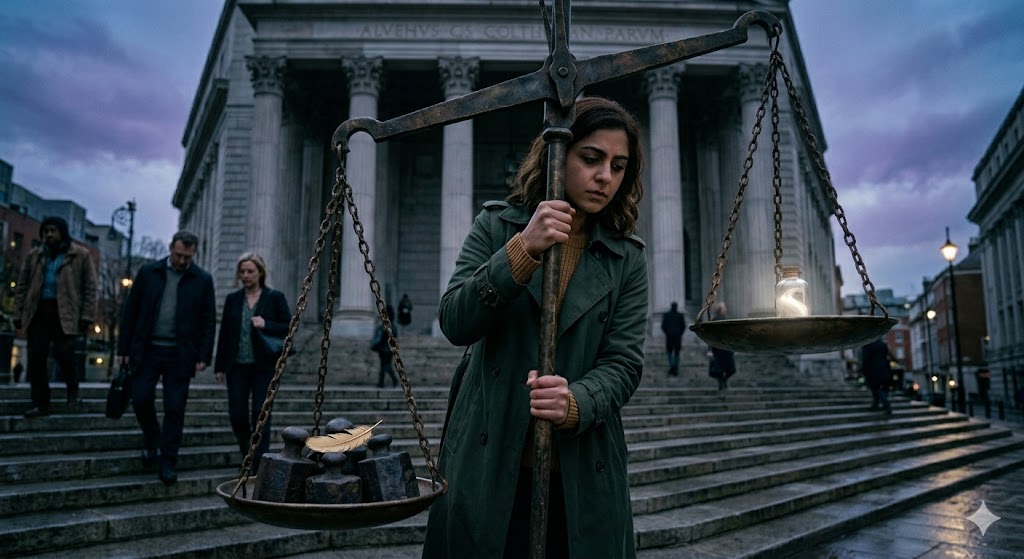
The rain began as a drizzle and transformed into a torrential downpour, a classic New York summer storm that turned construction sites into mud-filled trenches. Aryan sat in his 4×4 outside the gates of the GDAC Headquarters, the engine idling. His side mirror was gone — a reminder of the bullet that had missed his head by inches only an hour ago.
His phone buzzed. A message from Colonel James Hargrove: “The boardroom is a lion’s den. If you enter with that video, there is no turning back. Are you sure, Aryan?”
Aryan didn’t reply. He looked at the blueprints spread across his passenger seat. He thought of the 72-story towers in Dubai, the canals across the Hudson Valley. He wasn’t just a man on a payroll; he was a builder. And a builder cannot let a hollow foundation stand.
He stepped into the rain.
The Lion’s Den
The GDAC grand hall was a cathedral of bureaucracy. Aryan marched past reception, his wet boots leaving a trail of Sector 9 silt on the pristine floor. He didn’t stop until he reached the heavy oak doors of the Grand Committee Room.
Inside, the “Big Fish” were gathered. Commissioner Vincent Cross — the man from the warehouse — was at the head of the table. Beside him sat the directors of the planning authority and the CEO of Hudson Infrastructure Holdings. They were mid-laugh when the doors swung open.
“Engineer Aryan,” Cross smirked. “We heard you had a traumatic night. Perhaps the pressure has been too much for you?”
“The only thing under pressure here,” Aryan said, “is the tensile strength of your lies.”
Olivia Reynolds rose from her seat and walked to stand beside Aryan. “I’ve reviewed his data independently. Every byte is accurate. If you call him rogue, you call me rogue too.”
The Final Audit
Aryan swiped his tablet. The room’s projectors displayed a side-by-side comparison.
“On the left: procurement logs. On the right: Ground-Penetrating Radar scans from Tetragon engineers. Steel density? 42% of what was billed. You didn’t just steal steel — you created a death trap.”
He played the warehouse video. Cross appeared on screen, standing amidst stolen Grade-60 rebar, discussing “hollow piles.” The audio was crystal clear.
“I’ve forwarded this to the FBI Public Integrity Bureau,” Aryan said. “Sergeant Frank Malik has handed over the intercepted trucks.”
The doors opened. Colonel James Hargrove entered with Homeland Security investigators.
“The independent audit is complete,” the Colonel said. “The leakage goes back ten years.”
Chaos erupted. In the storm, Olivia’s hand found Aryan’s under the table.
Areeba’s Broken Heart
In the hallway, Areeba waited. Her eyes were red.
“I saw her in there,” Areeba said. “Standing next to you. She’s the one, Aryan.” She kissed his cheek. “Build a good life. You deserve it.” She walked away and didn’t look back.
“I love you, Aryan. That’s why I’m letting you go. Go to her. She’s your future. I’m just a chapter.”
⚖️ The Reckoning: Justice for Every Crime
“For every hollow foundation, every stolen ton of steel, every life put at risk — the law finally caught up.”
Commissioner Vincent Cross
Convicted of grand larceny, fraud, and criminal negligence. The mastermind behind the steel theft syndicate was sentenced to 25 years in federal prison. His assets — including three offshore accounts — were seized by the FBI.
Naveed (Night Supervisor)
The man who signed fraudulent manifests and laughed at Aryan’s “absence” was convicted on 14 counts of theft and evidence tampering. He now resides in a maximum-security facility in upstate New York.
Hudson Infrastructure Holdings (CEO & Directors)
The parent company was dissolved. The CEO and three directors received prison sentences for their roles in the conspiracy. The company paid $47 million in restitution to the state.
GDAC Corrupt Engineers & Inspectors
Seven GDAC engineers who signed off on the “hollow piles” were permanently disbarred from practicing engineering in New York. Their professional licenses were revoked.
The Night Guards & Security Colluders
Three security guards who opened gates for the midnight trucks were arrested and blacklisted from all future state infrastructure projects.
Higher-Level Political Backers
The investigation continues to reach higher into state politics. Two former GDAC commissioners are currently under federal grand jury investigation for racketeering.
The Legacy
Six months later, the Sector 9 grid station stood tall. The foundations had been demolished and repoured under Aryan’s personal supervision — this time with every ounce of steel required by the law of physics.
Aryan stood on the rooftop of the control building, looking out over the Queens skyline. He was now the Chief Technical Consultant for the National Infrastructure Watchdog.
His phone buzzed. A picture from Sergeant Frank Malik: junior engineers holding GPR scanners, meticulously checking their work.
“The Iron Sentinel,” Frank captioned it.
Footsteps behind him. Olivia.
“You never sleep, do you?”
“Neither do you.”
She stood beside him. “Areeba called. From Istanbul. She said to tell you to stop being an idiot and kiss me already.”
Aryan laughed — the first real laugh in months. He turned to face her. “Olivia…”
“I know,” she said softly. “It’s complicated.”
“No,” he said, taking her hand. “It’s not. Not anymore.”
He pulled her close, and under the steel-blue sky, above foundations rebuilt with honest hands, Aryan kissed her.
The suspense of his life was no longer about survival. It was about what he would build next. And this time, he knew the foundation was solid.
THE END.
🔗 Further Reading from Madina Construction Technologies:
• Why Structural Integrity Saves Lives
• The GDAC Scandal: How Steel Theft Collapses Bridges
• Using Thermal Imaging to Stop Midnight Heists
• Whistleblower Engineers: Stories of Courage
• Grade-60 Rebar: Why Density Matters
• Love Under Construction: Romance on the Job Site
• Exclusive Interview: The Real Iron Sentinel
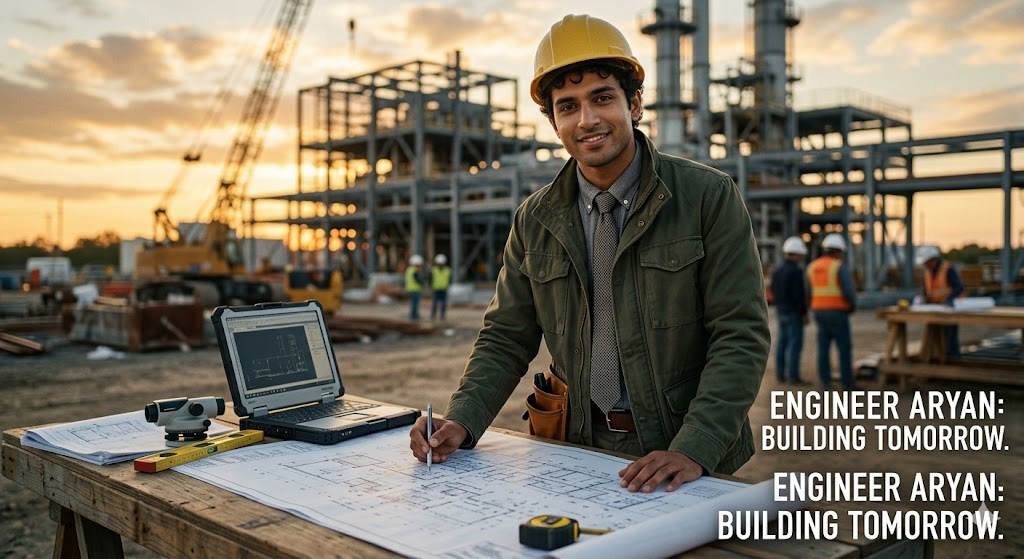
🎓 Victoria University (UK) Alumnus
🤖 Mechatronics Integration Expert
📐 Autodesk Certified Professional
🎨 3D Visualization Specialist
🔧 Founder, Madina Construction Technologies
Beyond the blueprints, Aryan is the founder of Madina Construction Technologies, where he champions the cause of structural integrity and transparent engineering practices. His firm doesn’t just build structures — it builds trust. Every foundation, every beam, every grid station that bears his signature is a testament to his belief that engineering is a moral profession, not just a technical one.
This story, “The Iron Sentinel,” is a reflection of his real-life commitment to professional ethics — a testament to a man who believes that the true strength of a nation is built on foundations that can never be compromised. The midnight audits, the thermal cameras, the boardroom confrontations — they aren’t just fiction. They are fragments of battles he has fought, syndicates he has faced, and victories he has earned with sweat and integrity.
Today, Aryan serves as the Chief Technical Consultant for the National Infrastructure Watchdog, training a new generation of engineers to wield GPR scanners like swords and to value honesty over a paycheck. He lives in New York with his partner, Olivia, but a piece of his heart will always remain with the young engineers in the field — and with the memory of Areeba, the woman who loved him enough to let him go.
“The Iron Sentinel” is not just a story. It is a warning to the corrupt and a salute to the silent warriors who build our world, one honest brick at a time.
🔗 Read More from Aryan / Madina Construction Technologies:
• Why Structural Integrity Saves Lives
• The GDAC Scandal: How Steel Theft Collapses Bridges
• Using Thermal Imaging to Stop Midnight Heists
• Whistleblower Engineers: Stories of Courage
• Exclusive Interview: The Real Iron Sentinel

TRUE ENGINEER LOVE STORY
Behind every great structure is an engineer. And behind every great engineer is a story of love — sometimes found, sometimes lost, and sometimes built from scratch like a suspension bridge, cable by cable, trust by trust.
The Iron Sentinel is not just a story of corruption and justice. It is a story of two women who loved the same man — one who stood beside him in the boardroom, and one who walked away so he could fly.
💚 Aryan
A man of steel and integrity. For 17 years, he built nations. But his own heart remained under construction — until two women dared to enter.
💛 Olivia Reynolds
Green eyes that saw through his walls. Professional respect that turned into midnight texts and boardroom alliances. She risked her career to stand beside him.
💜 Areeba Khan
She loved him first — seven years ago in Dubai. She loved him still. But true love isn’t possession. It’s sacrifice. She gave him wings.
❤️ The Love Timeline
Aryan saves Areeba’s brother from a collapsed canal. Areeba falls in love silently. She never tells him. They go their separate ways.
Aryan meets Olivia in a GDAC boardroom. She challenges him. He impresses her. Respect turns into something deeper.
“They’re watching you. Be careful. — O”
Aryan realizes someone cares about him beyond the project.
Seven years later, Areeba walks back into his life — not to claim him, but to help him win. She brings evidence. And a confession: “I never stopped loving you.”
She follows him into danger. Bullets fly. She holds his hand in the dark and whispers, “I took that bullet for you? No. But I would.”
Olivia rises from her seat and stands beside Aryan. “If you call him rogue, you call me rogue too.” She risks her career for him.
“I love you, Aryan. That’s why I’m letting you go. Go to her. She’s your future. I’m just a chapter.”
She walks away into the rain and doesn’t look back.
Olivia hands Aryan coffee. He finally stops running. Under the steel-blue sky, he kisses her. The engineer who built nations finally built a home.
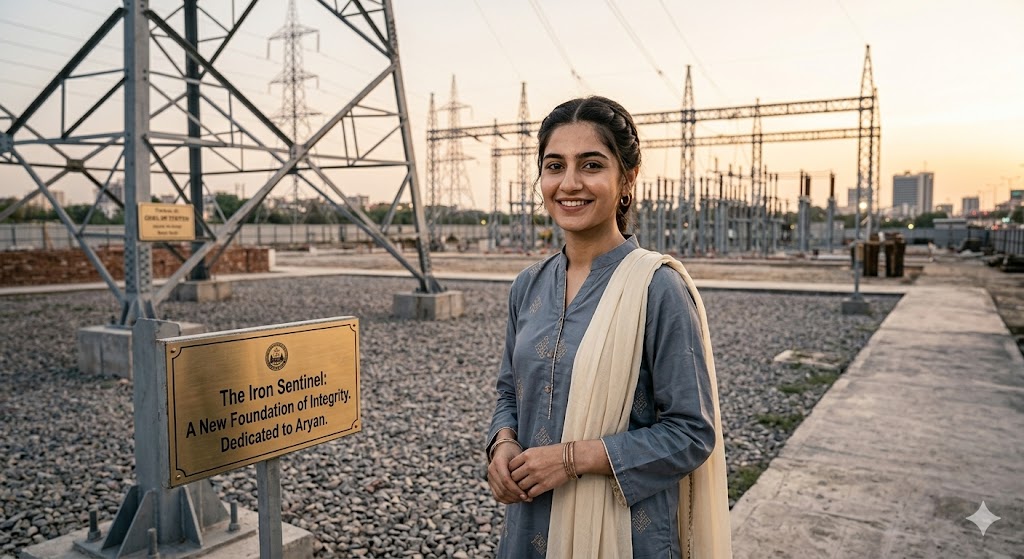
🔗 More from Madina Construction Technologies:
• Love Under Construction: Romance on the Job Site
• Exclusive Interview: The Real Iron Sentinel
• Whistleblower Engineers: Stories of Courage
❤️🩹
Love Never Dies
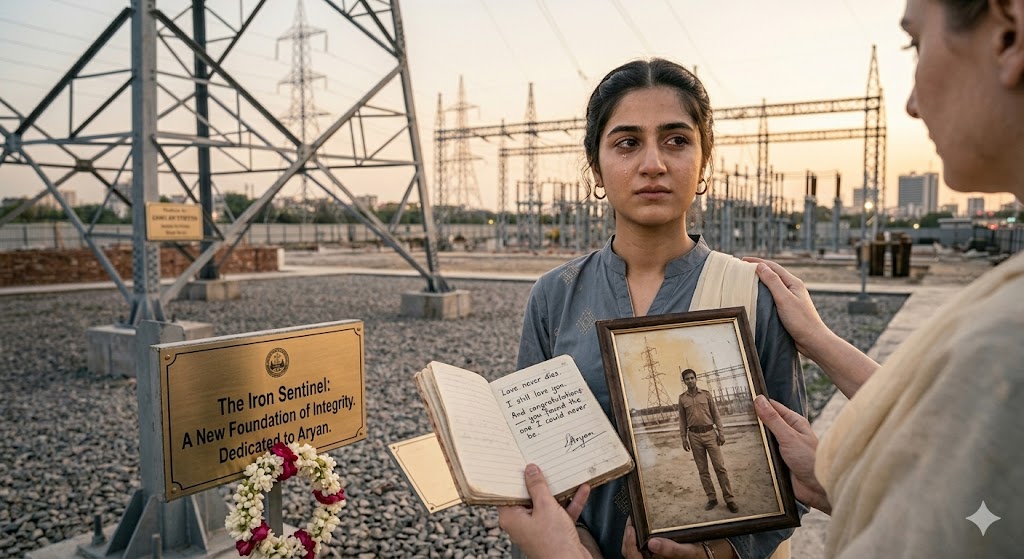
💖 The Truth About Love 💖
“Engineers build bridges that connect places. But love builds bridges between hearts. Areeba built one from Istanbul to New York. Olivia built one from the boardroom to the rooftop. And Aryan? He learned that the strongest foundation isn’t concrete or steel. It’s the love that never asks for anything in return.”
🔗 More Love Stories from the Construction World:
• Love Under Construction: Romance on the Job Site
• Exclusive Interview: The Real Iron Sentinel
• True Engineer Love Stories: When Hearts Meet Steel
🔨 At Madina Construction Technologies, we don’t just build structures; we build trust — and sometimes, we build love stories that last forever.