




Introduction
The 220 kV transmission line is a critical component of modern electrical power systems. Operating at extra-high voltage (EHV), these lines form the backbone of regional power transmission networks, connecting generating stations to load centers and enabling efficient bulk power transfer over distances ranging from 50 to 300 kilometers.
This comprehensive guide covers every aspect of 220 kV transmission lines — from design standards and component selection to construction methods and maintenance practices. Whether you are an electrical engineer, project manager, or student, this resource provides the technical depth needed to understand and work with 220 kV systems.

Design Standards and Regulatory Framework
220 kV transmission lines must comply with international and national standards to ensure safety, reliability, and interoperability. The most widely adopted standards include: Complete guide to 220 kV transmission lines covering design, components, towers, conductors, insulators, sag calculations, and installation process.
Primary Standards:
- IEC 60826: Design criteria of overhead transmission lines
- IEEE 691: Guide for transmission structure foundation design
- IEC 61897: Overline vibration dampers and their testing
- National Electrical Safety Code (NESC): For clearance requirements
Key Design Parameters for 220 kV:
- Nominal voltage: 220 kV (maximum operating voltage: 245 kV)
- Frequency: 50 Hz or 60 Hz (region dependent)
- Number of circuits: Single or double circuit
- Number of conductors per phase: Typically 1 or 2 (bundle configuration)
- Insulation level: BIL (Basic Insulation Level) of 1050 kV
Major Components of a 220 kV Transmission Line
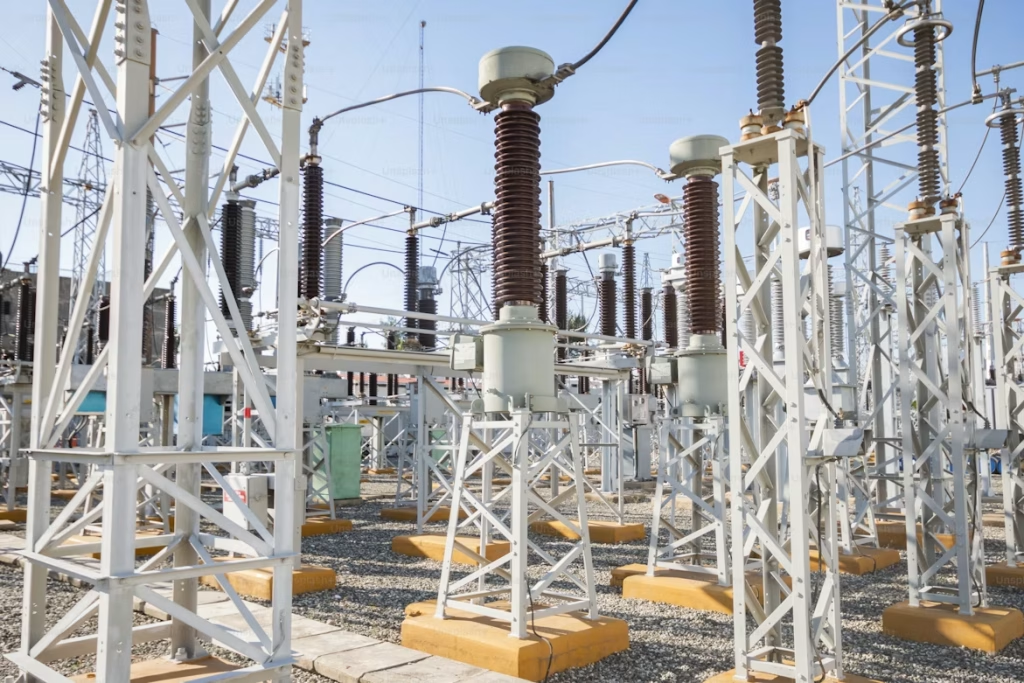
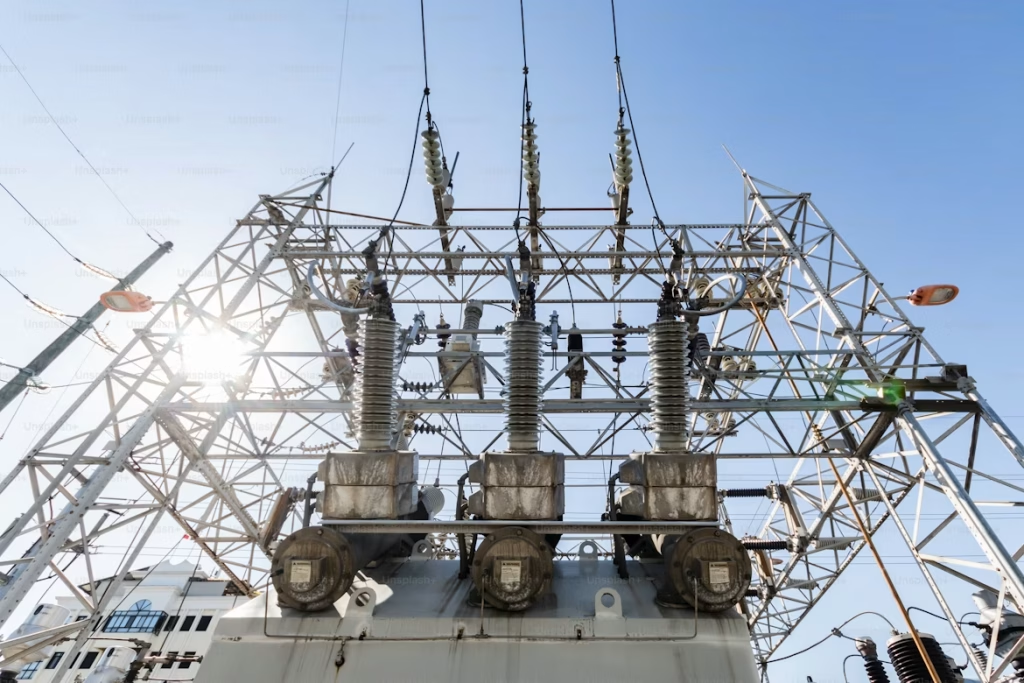
A 220 kV transmission line consists of several critical components, each designed to perform specific functions under various electrical and mechanical stresses.

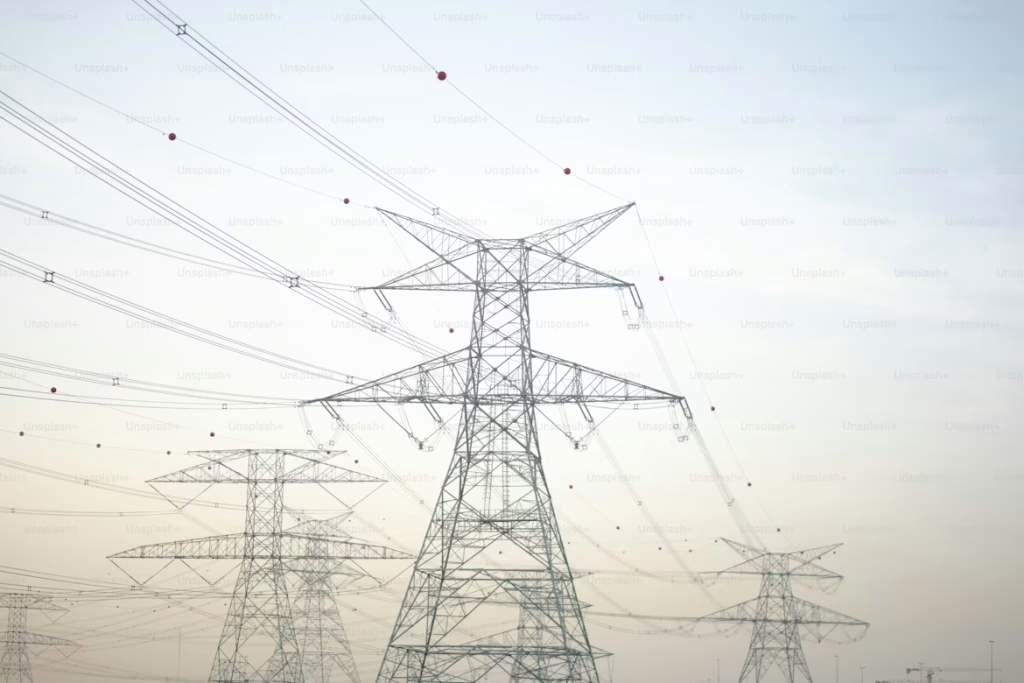
1. Transmission Towers
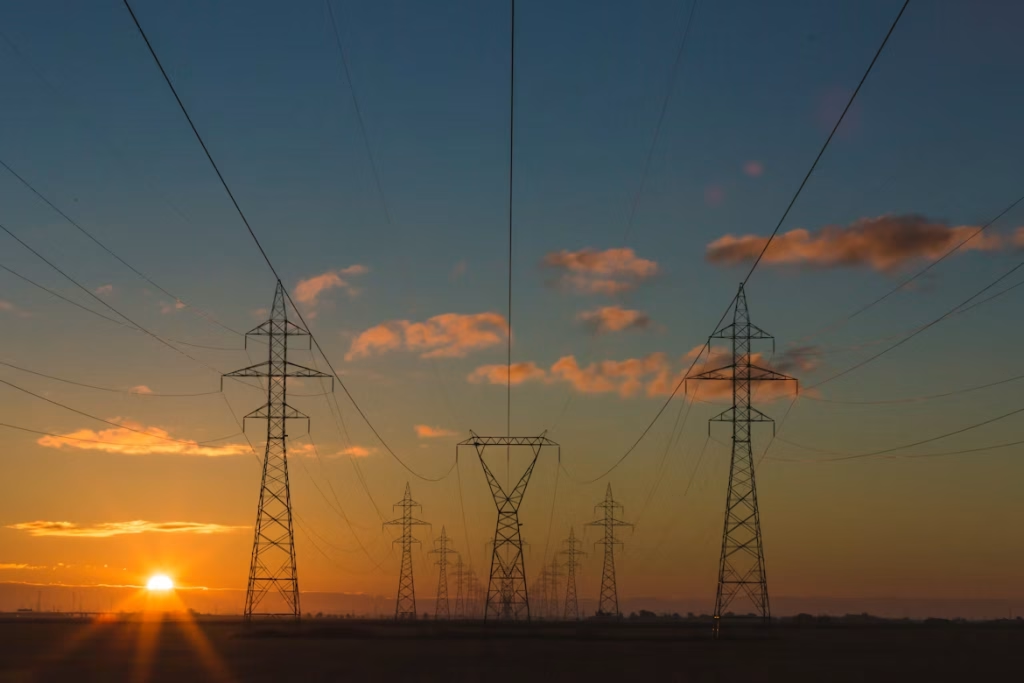
Towers support the conductors and maintain the required clearances. Common types include:
- Lattice steel towers: Most common for 220 kV, offering a high strength-to-weight ratio
- Tangent towers: For straight sections (70-80% of all towers)
- Angle towers: For line deviations (10-20 degrees or more)
- Dead-end towers: For line termination or tension sections
- Transposition towers: For balancing line parameters
Typical tower height for 220 kV lines ranges from 25 to 45 meters, with base widths of 6 to 12 meters depending on soil conditions and design loads.
2. Conductors
Conductors carry the electrical current. For 220 kV lines, the following are commonly used:
- ACSR (Aluminum Conductor Steel Reinforced): Most popular due to high strength and conductivity
- AAAC (All Aluminum Alloy Conductor): Better corrosion resistance
- ACAR (Aluminum Conductor Alloy Reinforced): Higher ampacity than ACSR
Typical conductor sizes: 477 kcmil (477,000 circular mils) to 954 kcmil. For a double bundle configuration, two conductors per phase with a spacing of 400-450 mm are used to reduce the corona effect and increase power transfer capacity.
3. Insulators
Insulators isolate the live conductors from the grounded towers. Types include:
- Cap and pin type (porcelain/glass): Traditional, reliable, most common for 220 kV
- Long rod composite insulators: Lightweight, hydrophobic, increasingly popular
- Number of insulator discs: Typically 15-18 discs for 220 kV in normal atmospheric conditions, more in polluted areas
String length: Approximately 2 to 2.5 meters for suspension strings, and 2.5 to 3 meters for tension strings.
4. Hardware Fittings
These connect components and transfer mechanical loads:
- Suspension clamps and tension clamps
- Vibration dampers (Stockbridge type)
- Corona rings and grading rings
- Arcing horns for lightning protection
- Spacers for bundled conductors
5. Shield Wires (Earth Wires / OPGW)
One or two shield wires are installed at the top of towers to protect against direct lightning strikes. Options include:
- Galvanized steel wires: Traditional, good mechanical strength
- OPGW (Optical Ground Wire): Combines lightning protection with fiber optic communication
- Shield wire angle: 15-20 degrees protection angle for effective shielding
6. Tower Earthing and Grounding
Proper grounding ensures safety and lightning performance:
- Earthing resistance: Typically less than 10 ohms per tower
- Earthing methods: Counterpoise wires, grounding rods, or foundation reinforcement
- Step and touch potential calculations for safety
Clearance Requirements for 220 kV Lines
Clearances are critical for safety and reliable operation. Minimum clearances for 220 kV lines (as per NESC/IEC standards):
Note: Actual clearances depend on local regulations, altitude, temperature, and sag calculations.
Step-by-Step Installation Process
Phase 1: Route Selection and Survey
- Desktop study using satellite imagery and topographic maps
- Field reconnaissance for ground truth verification
- Environmental and social impact assessment
- Final route alignment with wayleave acquisition
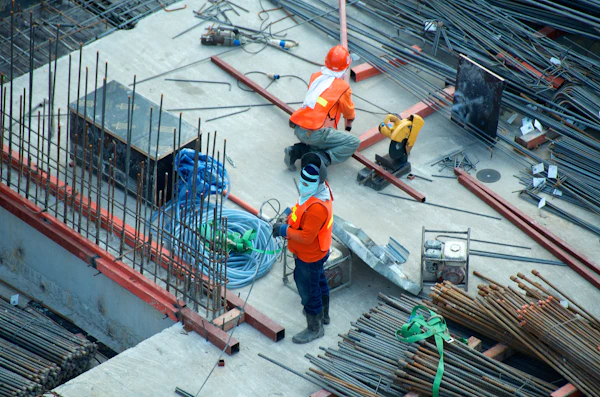
Phase 2: Foundation Construction
- Soil investigation and geotechnical analysis
- Excavation for tower footings (depth: 2-5 meters, depending on soil)
- Reinforcement cage placement and concreting
- Curing and strength testing (typically 28 days for full strength)
Phase 3: Tower Erection
- Stub setting and alignment
- Tower assembly (ground assembly for smaller towers, or piece-by-piece using cranes)
- Bolted connections with torque verification
- Galvanizing repair for damaged coatings
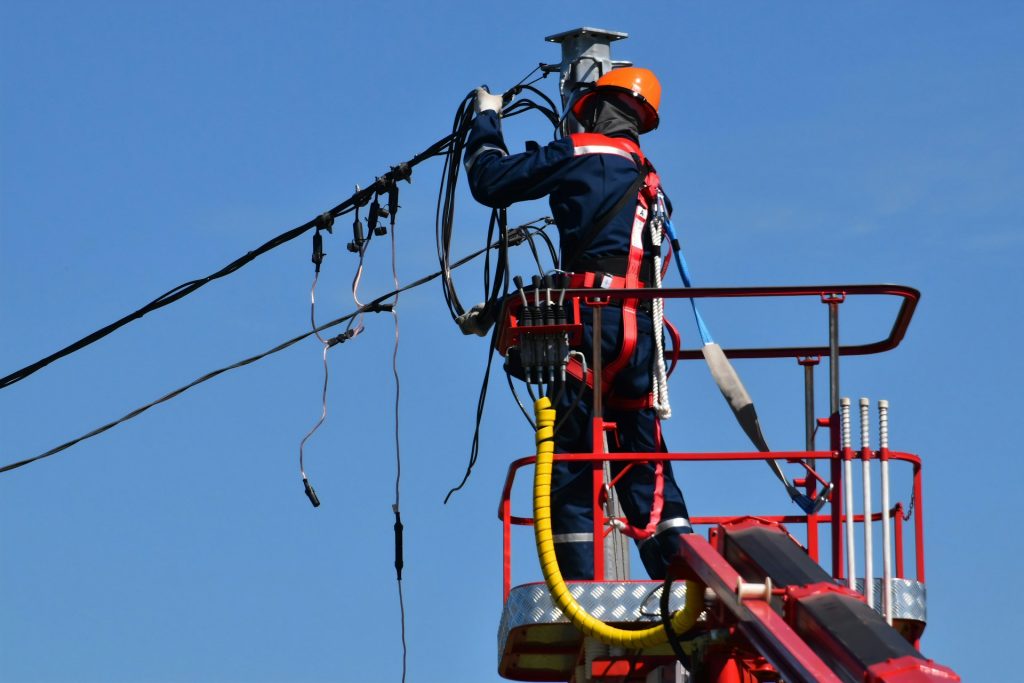
Phase 4: Stringing of Conductors
- Installation of insulator strings and hardware
- Pulling of the pilot rope using drones or helicopters (modern method) or manually
- Conductor pulling using tension stringing equipment to avoid damage
- Sag adjustment based on temperature and tension calculations
- Clipping (permanent attachment to insulators)
- Installation of vibration dampers and spacers
Phase 5: Accessories Installation
- Corona rings and grading rings at tension points
- Arcing horns for arc protection
- OPGW splicing and grounding (if using optical ground wire)
- Tower numbering and signage
Phase 6: Testing and Commissioning
- Insulation resistance measurement (megger test)
- Line parameter measurement (resistance, inductance, capacitance)
- Earth resistance measurement for each tower
- Corona and radio interference voltage measurement
- Energization at reduced voltage first, then full voltage
- Phasing check and load flow validation
Sag and Tension Calculations
Proper sag is essential for maintaining clearances and preventing conductor damage. For a 220 kV line with a 300-meter span and ACSR conductor:
- Initial sag at 30°C: Approximately 4.5 meters
- Final sag at 30°C (after creep): Approximately 5.2 meters
- Maximum sag at 75°C (high ambient + load): Approximately 7.5 meters
- Tension range: 25-35% of the ultimate tensile strength (UTS) of the conductor
The sag-tension calculation uses the parabolic or catenary equation based on span length and conductor characteristics. Software tools like PLS-CADD are commonly used for precise modeling.

Corona Effect in 220 kV Lines
Corona discharge occurs when the electric field gradient exceeds the dielectric strength of air. For 220 kV lines:
- Critical disruptive voltage: Approximately 150-180 kV (phase to ground)
- Visual corona onset: Typically at 200-220 kV under fair weather
- Corona losses: 5-20 kW/km during foul weather, negligible in fair weather
- Mitigation methods: Using bundled conductors, corona rings, and larger diameter conductors
Protection Systems for 220 kV Lines
High-speed protection is mandatory for 220 kV lines to maintain system stability:
- Primary protection: Current differential protection (87L) or distance protection (21) with permissive overreaching transfer trip (POTT)
- Backup protection: Step-distance protection with three or four zones
- Auto-reclosure: Single pole (most common) or three pole with 0.5-1 second dead time
- Circuit breakers: SF6 gas type with breaking capacity of 40-63 kA
Maintenance Practices
Routine Maintenance (Annually or Biannually):
- Thermal imaging of joints and connectors
- Insulator cleaning (live-line washing for heavily polluted areas)
- Vegetation clearance around tower bases and under conductors
- Hardware inspection for loose bolts or corrosion
Preventive Maintenance (Every 3-5 years):
- Insulator resistance measurement
- Conductor sag check and re-tensioning if needed
- Tower foundation integrity assessment
- Earthing resistance measurement and improvement
220 kV vs Other Voltage Levels
Cost Estimation for 220 kV Transmission Lines
Typical costs (USD, approximate, varies significantly by region and terrain):
- Material cost (towers, conductors, insulators): $80,000 – $150,000 per km
- Foundation and erection: $40,000 – $80,000 per km
- Stringing and accessories: $20,000 – $40,000 per km
- Land acquisition and wayleave: Highly variable ($10,000 – $100,000+ per km)
- Total turnkey cost: $150,000 – $350,000 per km (flat terrain) to $400,000+ per km (mountainous)
Advantages and Limitations of 220 kV Transmission
✓ Advantages
- High power transfer capability (300-600 MW)
- Economical for regional transmission (100-300 km)
- Mature technology with reliable components
- Established standards and maintenance procedures
- Lower losses compared to lower voltage levels
✗ Limitations
- Higher initial cost than 132 kV or lower
- Larger right-of-way requirement
- Visual impact on the landscape
- Corona and radio interference potential
- Not economical for very short distances
Future Trends in 220 kV Transmission
- Uprating existing lines: Replacing conductors with high-temperature low-sag (HTLS) conductors to increase capacity by 50-100%
- Composite cross-arms: Reducing tower weight and improving insulation
- Live-line maintenance: Advanced robotic and drone-based inspection
- Digital twin models: For predictive maintenance and asset management
Conclusion
The 220 kV transmission line remains an optimal solution for regional power transmission, balancing cost, capacity, and distance requirements. Proper design, quality components, and rigorous installation practices ensure decades of reliable service. Understanding the technical details presented in this guide — from tower types and conductor selection to sag calculations and protection systems — equips engineers and project managers to execute successful 220 kV projects.
As power systems evolve with renewable energy integration, the 220 kV grid will continue to play a vital role in delivering electricity from generation sources to population centers.

Frequently Asked Questions
What is the maximum distance for a 220 kV transmission line?
Without intermediate compensation, 220 kV AC lines can effectively transmit power up to 300 km. With series capacitors and shunt reactors, the distance can be extended to 400-500 km.
How many insulator discs are used for 220 kV?
Typically, 15 to 18 porcelain or glass discs per string for normal atmospheric conditions. In highly polluted industrial or coastal areas, 20 to 22 discs may be required.
What is the typical right-of-way width for a 220 kV line?
For a single circuit line, the ROW is approximately 30-35 meters. For a double circuit line, 35-45 meters is typical.
What is the life expectancy of a 220 kV transmission line?
With proper maintenance, a 220 kV line can operate for 50 to 70 years. Galvanized steel towers last 50+ years, while conductors may need replacement after 40-50 year,s depending on loading and environmental conditions.
Can a 220 kV line be upgraded to 500 kV?
Generally not directly, as tower dimensions, insulator lengths, and clearances are insufficient for 500 kV. However, the existing corridor can sometimes be used for new 500 kV towers with a wider ROW.
📢 Found this guide helpful? Share it with fellow engineers and power system professionals.
🔗 Explore more technical articles at MadinaConTech.com
© 2026 MadinaConTech — Professional resources for electrical power professionals.