
📅 April 29, 2026
✍️ By MadinaConTech Team
⏱ 9 min read
📍 Islamabad, Pakistan
In the sweltering heat of April 2026, a strange reality persists across Pakistan. On paper, the national grid is overflowing with generation capacity. Between the coal plants of Thar, the wind corridors of Jhimpir, and the massive hydro projects, the country has more “megawatts” than it knows what to do with. Yet, from the streets of Lahore to the industrial zones of Faisalabad, the power still goes out. How to Manage The Manual Crisis: Pakistan’s Power Grid in 2026.
Why? Because in Pakistan, electricity isn’t just an engineering challenge; it is a financial trap and a technical relic. Pakistan has 45,000 MW, but still faces load shedding in 2026. Exposing manual switch failures, IPP traps, and smart grid solutions. Read now.
The Manual Switch in a Digital Age: Why Pakistan’s Power Crisis Persists in 2026
For decades, the hum of a generator or the sudden silence of a ceiling fan has been the unofficial soundtrack of life in Pakistan. In April 2026, despite smart cities rising across the globe and AI-managed grids becoming the norm in Europe and China, the term “load shedding” remains as painfully relevant as it was in the 1990s. The paradox is staggering: Pakistan’s installed power capacity now exceeds 45,000 MW—enough to light up every home and factory. Yet millions of Pakistanis still sit in the dark for hours every day.
The question is no longer just about a “shortage.” It is about a fundamental failure to modernise, a refusal to digitise the grid, and a toxic cycle of “repeat mistakes” that have turned a solvable technical challenge into a national crisis. In this deep-dive, MadinaConTech exposes the real reasons behind the ongoing darkness—and offers a roadmap out.
📖 Inside This Analysis
- 1. The Ghost in the Grid: Who Really Flips the Switch?
- 2. Why Isn’t WAPDA Computerized?
- 3. The IPP Trap: Paying for Silence
- 4. The Weather Myth: Fog, Humidity & “Tripping.”
- 5. The Transmission Bottleneck
- 6. The Rise of the “Solar Rebel.”
- 7. Corrective Measures for 2026-2030
- 8. Conclusion: 1926 or 2026?
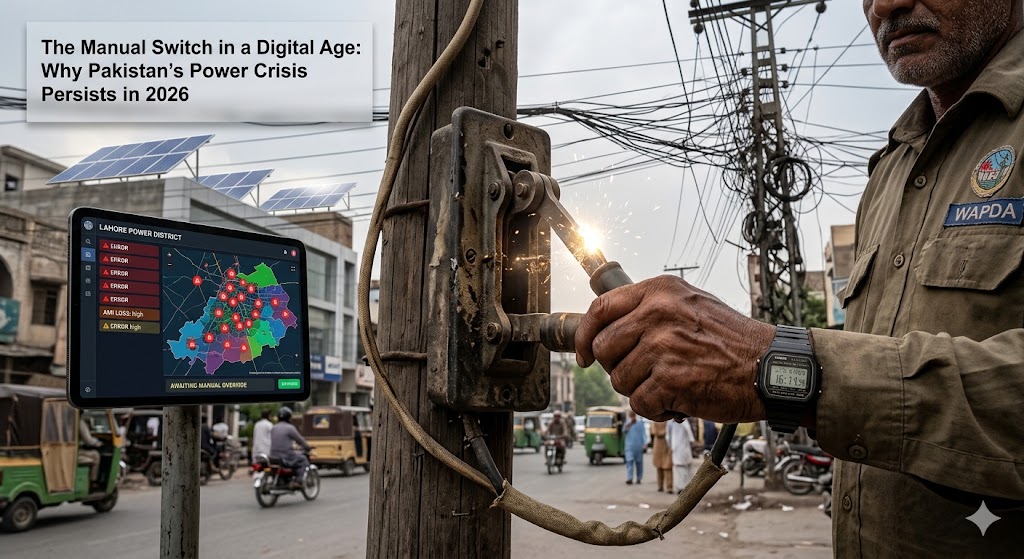
One of the most frustrating aspects of the Pakistani power experience is the total lack of transparency. When the lights go out—usually without warning—the common citizen is left wondering: Who did this? In 2026, while the world experiments with AI-governed Smart Grids that balance load in milliseconds, Pakistan remains tethered to a manual dispatch system straight out of the 1970s.
At the heart of every local grid station is a human—the “Switch-Man” or grid operator. When the National Power Control Centre (NPCC) observes a drop in frequency or a surge in demand, they do not click a button on a software dashboard. Instead, they make a phone call. That call travels down to a local Sub-Divisional Officer (SDO), who then physically pulls a lever to disconnect a feeder. Because it’s manual, it’s prone to bias, error, and zero accountability. There is no digital log for the public to verify if an outage was a “technical fault” or a deliberate act to manage DISCO losses.
Until the “Switch-Man” is replaced by a computerised algorithm, the grid will remain a tool of convenience for the powerful rather than a reliable service for the public. Want to learn how digitisation fixes this? Check out our detailed guide on Smart Grid Pakistan: The Future of Electricity Management →
2. Why Isn’t WAPDA Computerized? The Resistance to Transparency
The technology to fix this—Advanced Metering Infrastructure (AMI) and SCADA systems—has existed for over a decade. Computerising the grid would mean every unit of electricity generated is tracked until it reaches the consumer’s bulb. So why is the transition so painfully slow? The answer lies in what economists call the “Economy of Theft.”
A computerised system is an honest system. It would instantly identify where “Line Losses” (a polite term for electricity theft) are occurring. In 2026, line losses in some DISCOs still hover between 18% to 25%. In a digitised environment, AI would flag exactly which transformer is being overloaded by illegal kunda connections. For corrupt elements within distribution companies and powerful local interests, computerisation is an existential threat.
Furthermore, ageing WAPDA infrastructure—transformers over 30 years old—cannot handle modern digital sensors. Trying to install digital controllers on them is like installing Windows 11 on a 1995 computer. Until a massive “grid hardening” program is undertaken, digitalisation remains a distant dream. Read our related piece: Electricity Theft in Pakistan: Practical Solutions That Work →
To understand why your electricity bill is high while your house is dark, you must understand the role of Independent Power Producers (IPPs). In the 1990s and 2000s, Pakistan signed “Take-or-Pay” contracts. This means the government pays these private companies a “Capacity Charge” just for being available—whether they generate electricity or not.
In 2026, these capacity payments have become a financial anchor, projected to cost the country nearly Rs 2.8 trillion this year alone. We are effectively paying for power we do not use. When the government lacks cash to buy fuel (due to the circular debt), they shut down the plants. Yet they still have to pay the IPPs for “staying ready.” This is why, even during months of low demand, your electricity tariff rises. It is a debt trap disguised as an energy policy.
According to the International Monetary Fund (IMF) Pakistan page, circular debt has crossed Rs 2.5 trillion again. Without renegotiating IPP contracts, the crisis will only deepen. For a deeper analysis, see: Circular Debt in Pakistan: A Simple Explanation →
4. The Weather Myth: Fog, Humidity, and “Tripping.”
Every winter and monsoon, the same excuse is repeated: “The lines tripped due to fog/humidity.” To a professional engineer, this is an admission of failure in preventive maintenance. The famous “fog tripping” occurs not because fog is mysterious, but because dust and industrial soot settle on ceramic insulators. When fog or light rain hits, this dust turns conductive, causing a “flashover.”
The “repeat mistake” is that DISCOs fail to perform scheduled “line washing” before the fog season. In a modern system, sensors would detect leakage current and alert a crew. In Pakistan, we wait for the line to explode and then call it an “act of God.” As reported by NEPRA’s official reports, over 40% of winter outages are purely preventable with basic maintenance.
Related read from MadinaConTech: Why Pakistan’s Grid Maintenance Fails Every Year →
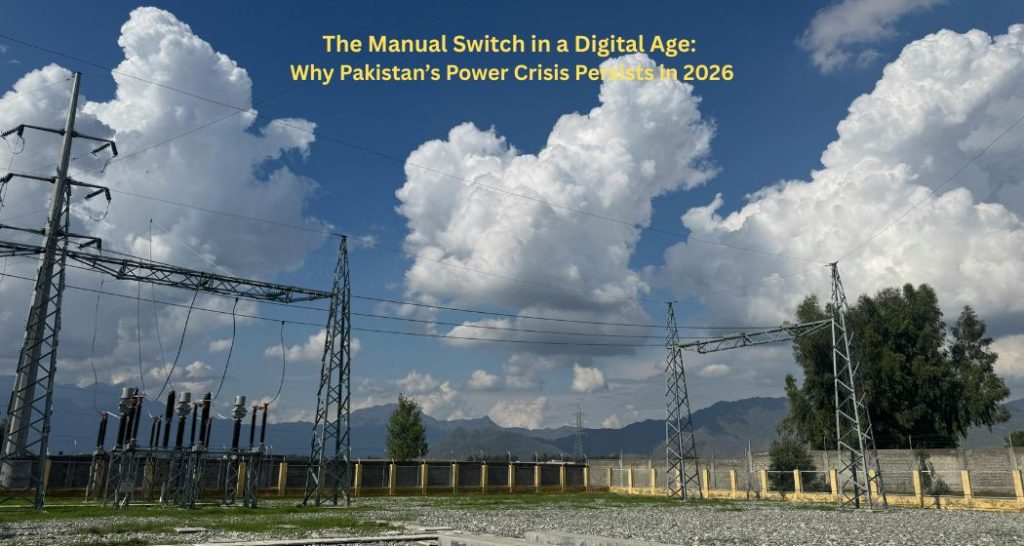
Imagine a massive water tank (Generation) and a thirsty city (Consumers). If the pipe connecting them is narrow and leaking, the city stays thirsty. This is the state of Pakistan’s Transmission Network (NTDC). Most of our cheap power—wind from Jhimpir and coal from Thar—is in the south. But the heavy demand is in the north: Lahore, Faisalabad, Sialkot, and Islamabad. Our 500kV and 220kV lines are often maxed out.
In 2026, there have been dozens of cases where cheap electricity was available in Sindh, but we had to turn on expensive furnace oil plants in Punjab because the “wires can’t carry” the cheap power across the country. According to the World Bank Pakistan overview, transmission congestion adds at least Rs 150 billion annually to the circular debt. New high-voltage lines are urgently needed.
6. The Rise of the “Solar Rebel.”
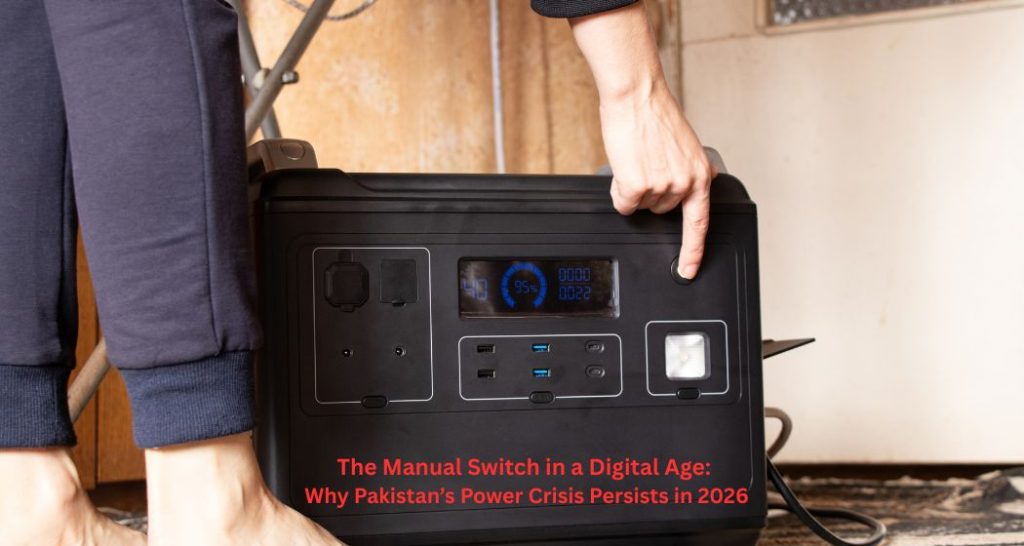
By April 2026, a silent revolution has taken place on rooftops across DHA, Gulberg, and Bahria Town. Tired of the “Switch-Man” and IPP bills, thousands have moved to solar with battery storage. While good for individuals, this has created a new challenge. The national grid was designed for one-way traffic (Power Plant → Home). Now, with two-way traffic from solar exports, voltage fluctuates wildly.
Because the grid isn’t computerised, this influx causes protection devices to trip. Instead of embracing solar, the 2026 policy has seen the government try to reduce Net-Metering benefits. Once again, protecting IPPs over consumers. Want to go solar? Read our guide: Complete Guide to Solar Net-Metering in Pakistan →
To fix this, we must stop building new plants and start fixing digital infrastructure. Here’s the roadmap:
| Measure | Expected Impact by 2028 |
|---|---|
| Mandatory AMI (Smart Meters) on industrial feeders | Reduce line losses by 40% |
| Feeder-level privatisation/performance contracts | Lower load shedding by 60% |
| Grid hardening (polymer insulators, sensors) | Eliminate fog tripping |
| Renegotiate IPP contracts to be utilisation-based | Save Rs 1 trillion annually |
| New transmission lines (south to north) | Add 4,000 MW transfer capacity |
As we’ve explained in Pakistan’s Energy Sector Reforms 2025-2030 →, none of this requires foreign magic. The technology exists. What’s missing is political will.
“The silence of a stalled ceiling fan is not a technical failure. It is a governance failure. Until we digitize the switch, Pakistan will remain a dark spot on the energy map of the world.” — MadinaConTech Editorial
The crisis of load shedding in Pakistan is not a lack of resources. The coal is in Thar. The wind is in Jhimpir. The sun shines 300 days a year. Installed capacity exceeds demand. The crisis is, instead, a crisis of will. It is a crisis of entrenched interests that profit from darkness.
If we continue to let “manual mistakes” and “weather excuses” justify darkness, the year 2030 will look no different from 2026. The technology to end load shedding exists today—digital, automated, transparent. Deployed successfully in dozens of countries.
The question for Pakistan’s authorities is simple: Are you ready to flip the digital switch, or will you keep the nation in the shadows to protect a broken system? The silence of a stalled ceiling fan is waiting for an answer.
Subscribe to MadinaConTech’s newsletter for weekly deep-dives on energy, technology, and national affairs.
Share this article: If you found this analysis useful, share it with policymakers, engineers, and concerned citizens. Change begins with awareness.
Written by the MadinaConTech Team — your trusted source for analysis of technology and national affairs.